From February 2028, new SBTi Scope 3 targets must cover each category above 5%
SBTi's Corporate Net-Zero Standard V2.0 replaces a single Scope 3 coverage threshold with targets for each category above 5% of emissions, for new submissions from 1 February 2028.
By Carbon3 team3 min read
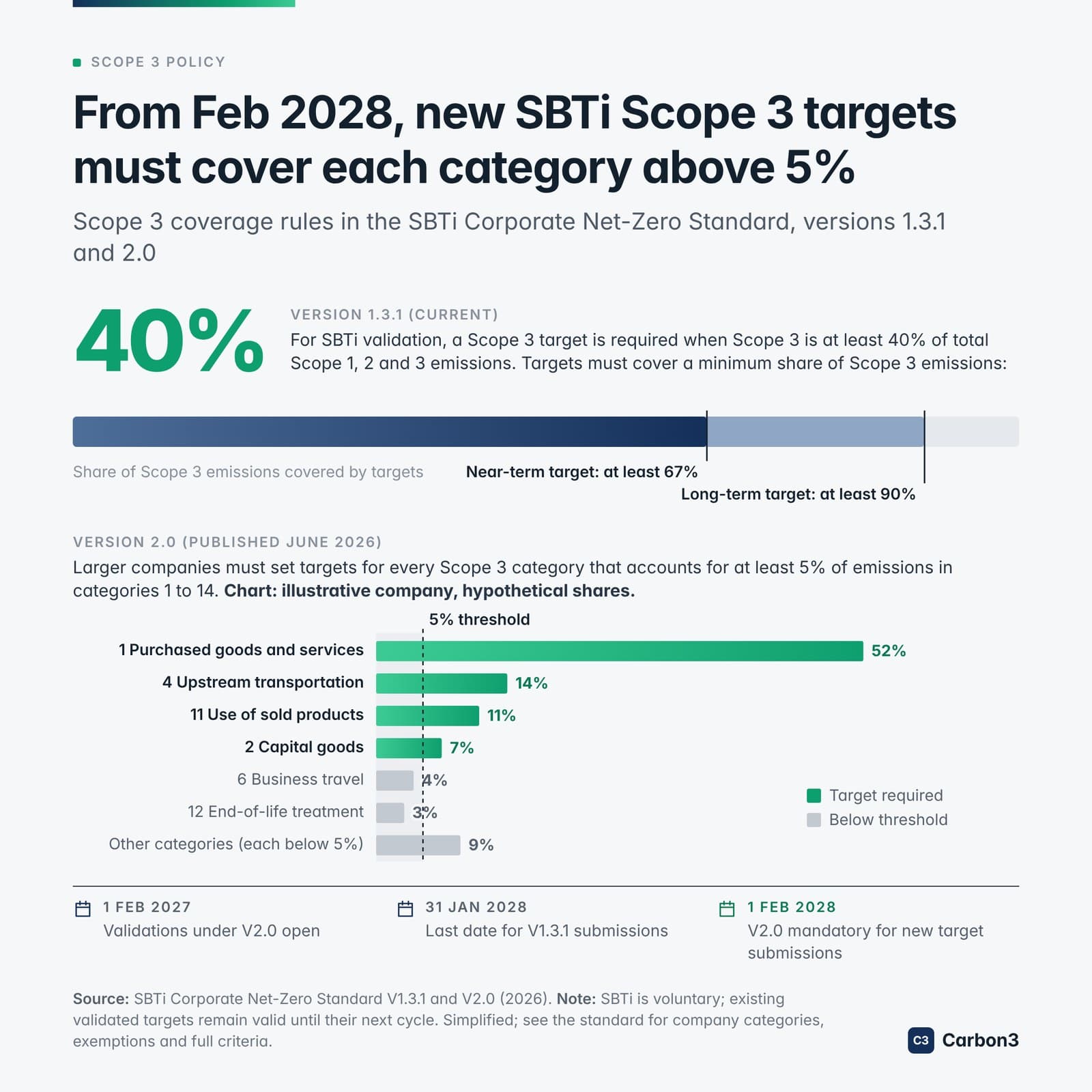
From 1 February 2028, new science-based targets will have to treat Scope 3 one category at a time. Under version 2.0 of SBTi's Corporate Net-Zero Standard, a new target submission must include a target for each Scope 3 category that accounts for more than 5% of a company's emissions. For many companies, that moves the work from the inventory total down to individual supplier categories.
The current rule
Under the Corporate Net-Zero Standard V1.3.1, the trigger and the test are both set at the level of the whole inventory. A company sets a Scope 3 target once Scope 3 reaches 40% of its emissions. The target then has to cover a share of Scope 3: 67% for near-term targets and 90% for long-term targets.
That structure leaves room to choose. A company can reach the coverage threshold by concentrating on its largest categories and leaving smaller ones outside the target boundary, as long as the total adds up.
What changes in 2028
From 1 February 2028, V2.0 applies to new target submissions. Instead of a single coverage percentage across Scope 3, it requires targets for each Scope 3 category above 5%. A category that clears that bar can no longer sit outside the target simply because the larger categories already carry the coverage number.
The change applies to new submissions. Existing validated targets remain valid until their next cycle, according to SBTi. Companies with validated targets therefore have time, but the new rule will apply when they next resubmit.
Why category-level targets reach suppliers
Scope 3 categories are, for most companies, a map of their suppliers and customers: purchased goods and services, upstream transport, use of sold products and so on. A target for each category above 5% means a separate question for each of those relationships. What is the baseline, what is the reduction pathway, and who in the value chain actually makes the reduction happen?
For a category such as purchased goods, the answer usually sits with a small number of suppliers whose own processes, fuels or farming practices drive the emissions. Setting a credible category target means engaging those suppliers directly, understanding where their reductions can come from, and finding a way to fund and record them.
Where insetting fits
Insetting is one way companies work on reductions inside their own value chains. A company co-funds a lower-emission practice at a supplier, the resulting reduction is verified, and it is recorded so that it is counted once. Because the reduction happens within the company's own supply chain, it relates to the categories its targets cover. That is what separates insetting from offsetting, which funds reductions outside the value chain.
How any of this counts against a target is set by SBTi's rules and the applicable reporting framework. Claim treatment depends on the applicable reporting framework.
The practical step now
The 2028 date is a submission deadline, but the groundwork comes first. Companies planning a new or renewed target can start by checking which Scope 3 categories sit above 5% of their emissions, which suppliers drive each of them, and whether those suppliers have reduction projects that could be co-funded. Carbon3 works on the record-keeping side of that problem: tracking verified value-chain reductions so each tonne is issued, transferred and retired once.
Source: SBTi, Corporate Net-Zero Standard V1.3.1 and V2.0.
Originally published on LinkedIn, 16 October 2026.
The Carbon3 Newsletter
Weekly analysis of industrial decarbonization and insetting across Scope 1 to 3, from the Carbon3 team.
Read more from the research team.
Claims & reporting
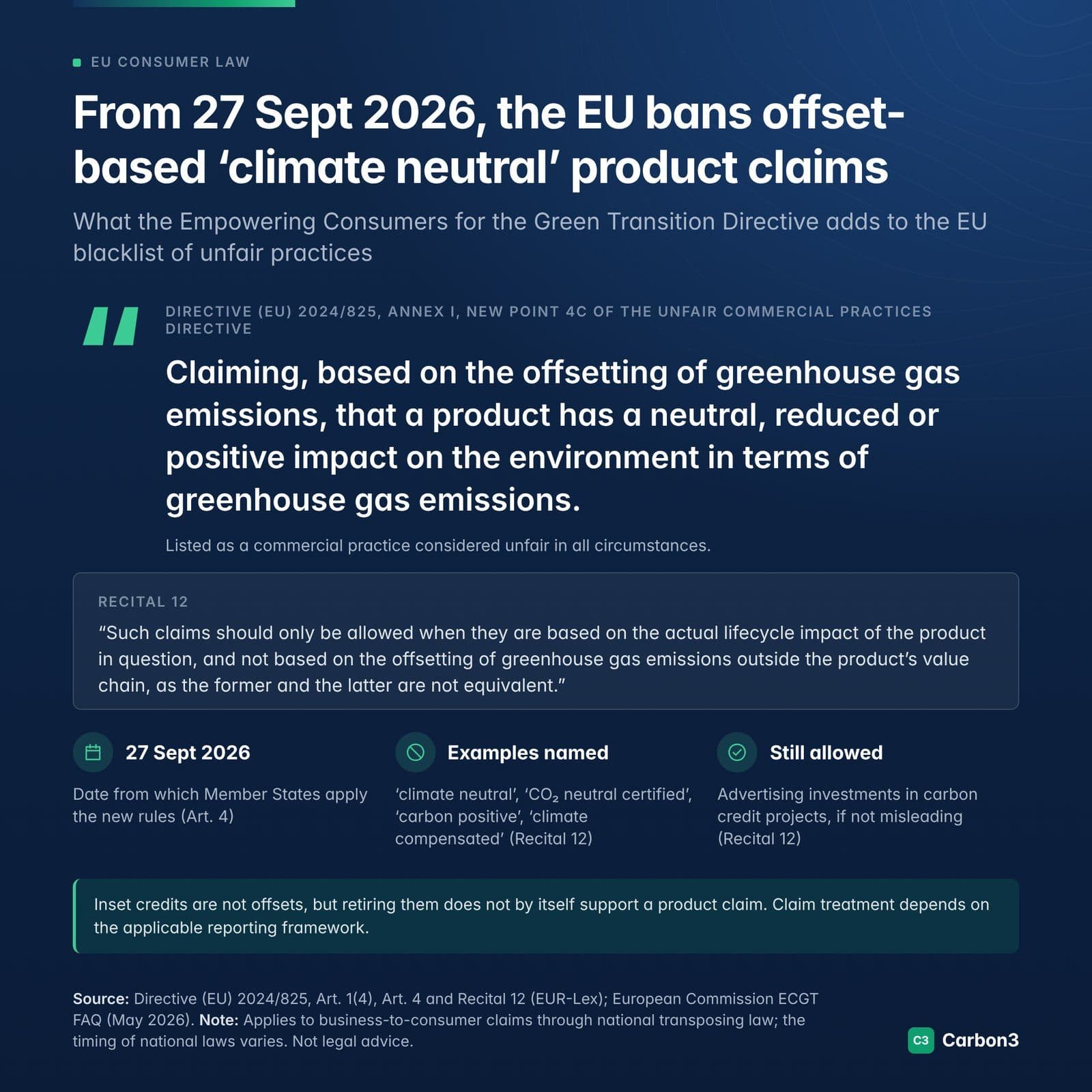
'Climate neutral' labels backed by offsets are now on the EU blacklist
Directive (EU) 2024/825 bans offset-based neutrality claims on products from 27 September 2026, shifting attention to reductions inside the value chain.
Read the articleClaims & reporting
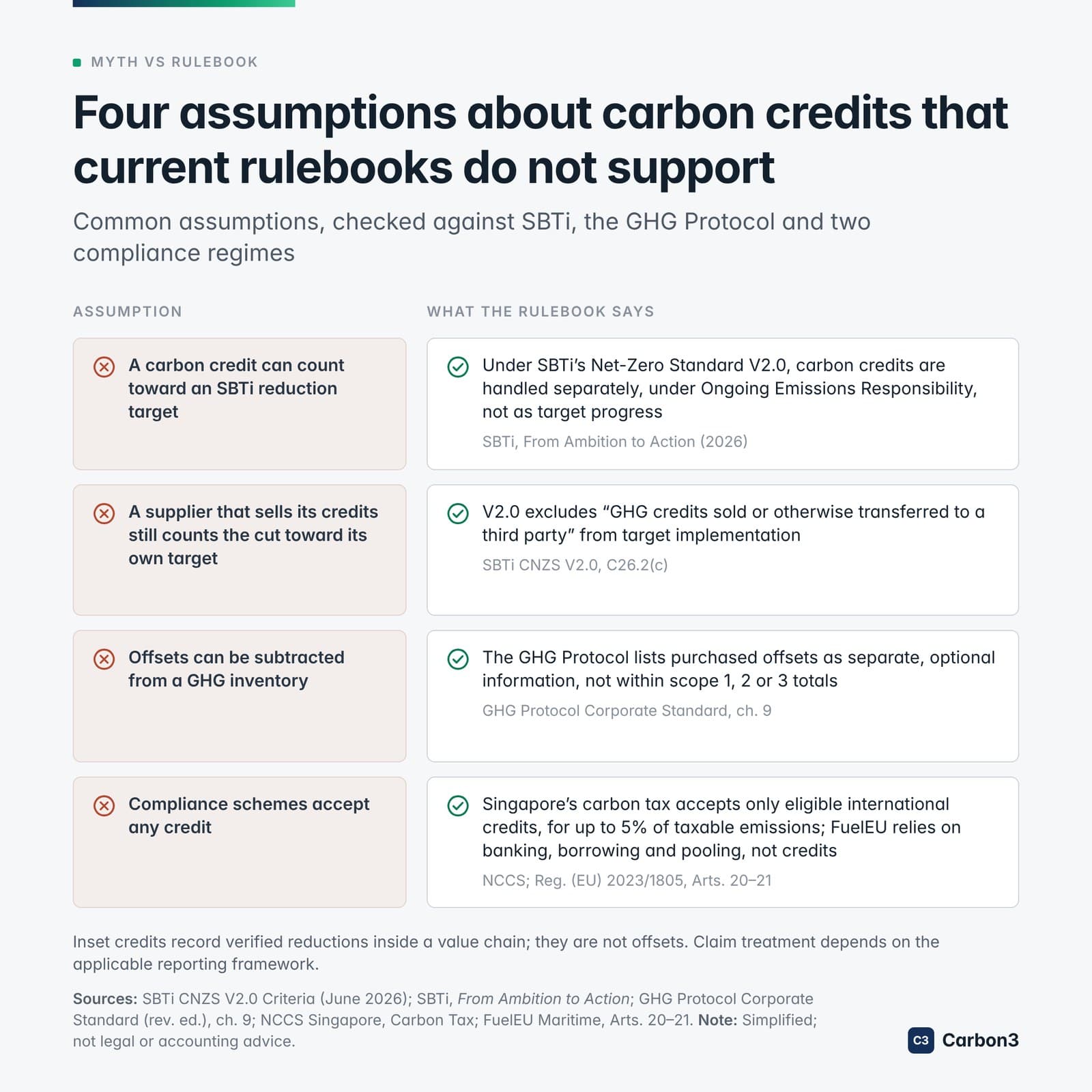
Four common assumptions about carbon credits, checked against the rulebooks
SBTi V2.0, the GHG Protocol, Singapore's carbon tax and FuelEU Maritime each keep credits apart from targets, inventories or compliance in their own way.
Read the articleClaims & reporting
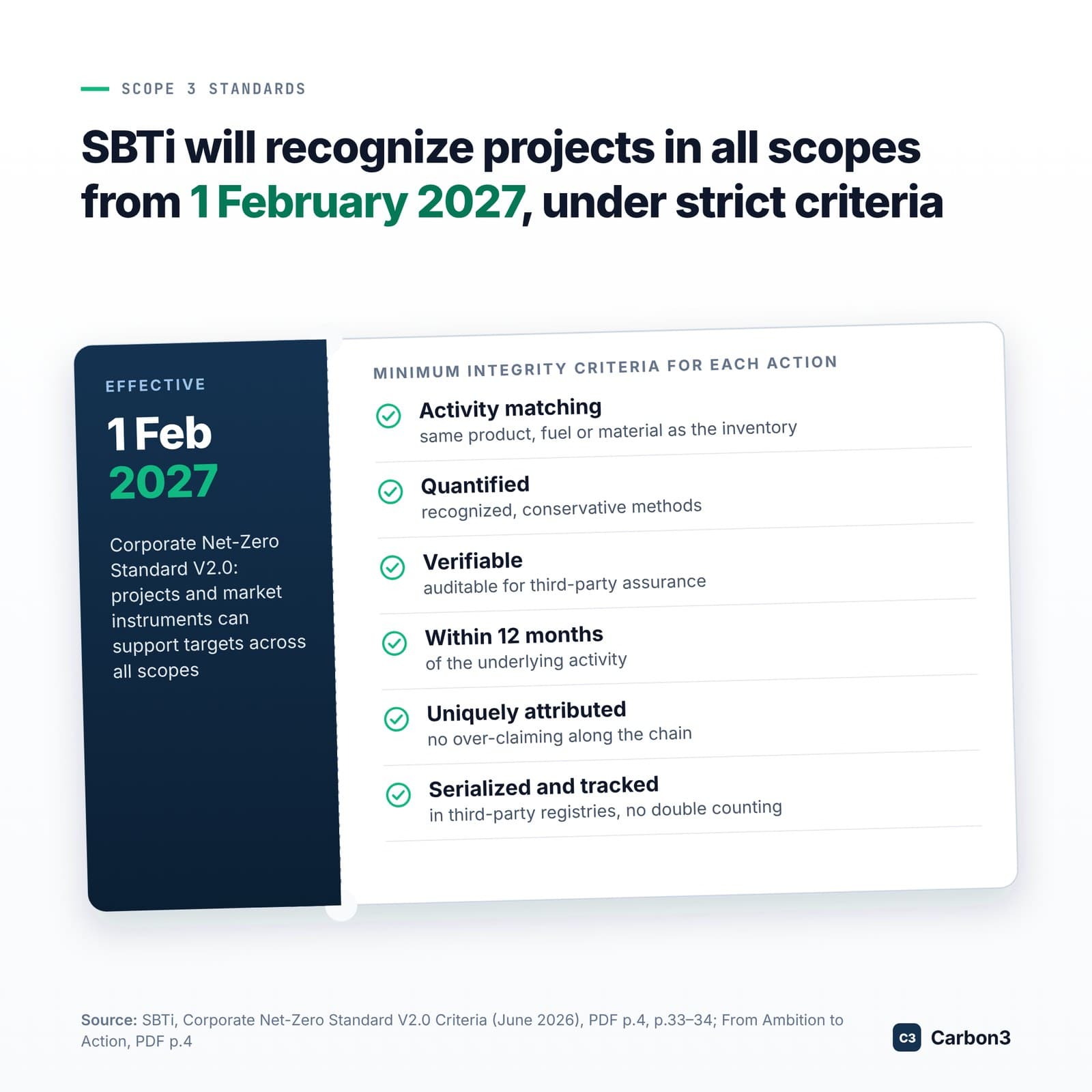
The SBTi has set the rules for using value-chain projects toward targets
The Corporate Net-Zero Standard V2.0 opens for validations on 1 February 2027, becomes mandatory for new targets on 1 February 2028, and lets projects support targets across all scopes, provided each action is verifiable, timely, uniquely attributed and serialized.
Read the article
See the companies behind these figures in the Data Hub.
Look up your suppliers’ emissions and targets, free.