Insetting turns a sustainability expense into a supplier relationship
BASF and Boortmalt on barley emissions, Royal Canin and Soil Capital on 300,000 hectares of farmland, and ZEMBA on pooled buying power for low-emission shipping.
By Carbon3 team1 min read
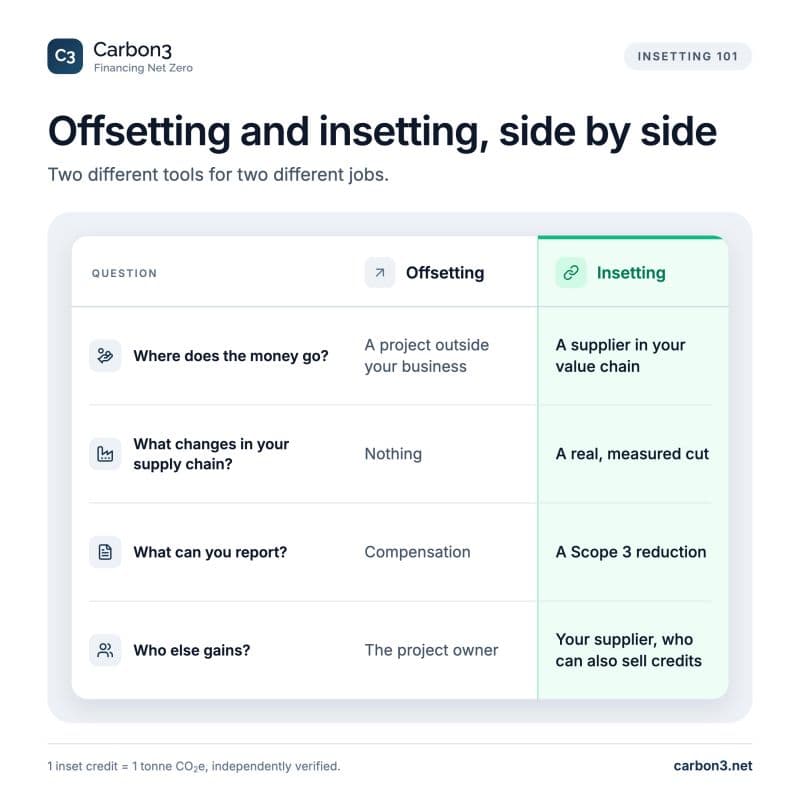
Choosing carbon insetting over offsetting is a massive win for company finances and supply chain resilience. Instead of sending capital outside your chain to buy volatile external carbon credits, insetting invests those funds right back into your own ecosystem to address emissions at the source.
We see this shift playing out across major industries: agricultural giants are scaling projects like the BASF and Boortmalt carbon farming alliance to slash barley emissions by 90%, while brands like Royal Canin partner with Soil Capital to transition up to 300,000 hectares of supplier farmland into climate-resilient soil. Even in heavy logistics, coalitions like the Zero Emission Maritime Buyers Alliance (ZEMBA) pool the buying power of brands like Nike to scale commercial e-fuels and low-emission shipping.
Ultimately, funding these upgrades with your actual partners transforms sustainability from a recurring, empty expense into a smart investment that secures raw materials, builds ironclad supplier relationships, and future-proofs your brand against strict Scope 3 regulations.
Start insetting today, visit https://carbon3.net
Originally published on LinkedIn, 24 September 2026.
The Carbon3 Newsletter
Weekly analysis of industrial decarbonization and insetting across Scope 1 to 3, from the Carbon3 team.
Read more from the research team.
Field notes
Climate Week NYC and the 70% that sits in the supply chain
As Climate Week NYC opens, the number that matters for most companies is where their emissions sit: around 70% in the supply chain.
Read the articleField notes
Low-carbon supply is a procurement problem
In the Scope 3 Peer Group's survey of 180+ suppliers, 43% say low-carbon options cost more, yet contracts are still awarded on unit price.
Read the articleSector: Maritime
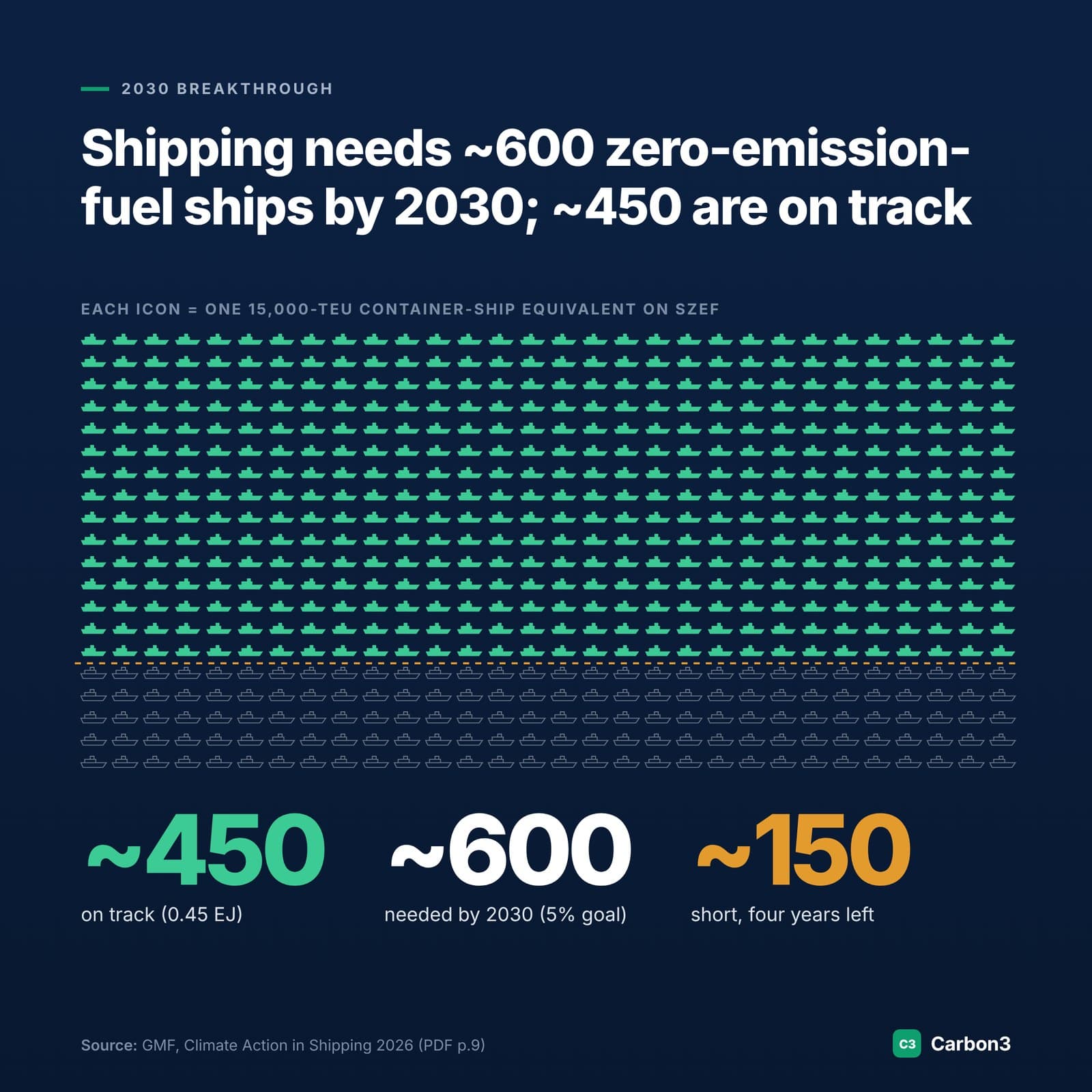
Shipping's 2030 fuel goal is about 150 ships short, with four years left
The Global Maritime Forum estimates the 5% breakthrough goal needs about 600 large container ship equivalents on scalable zero-emission fuels by 2030.
Read the article
See the companies behind these figures in the Data Hub.
Look up your suppliers’ emissions and targets, free.