Most CSOs still frame sustainability as compliance
In the World Economic Forum's 2026 CSO Outlook, 65% of respondents described sustainability primarily as a compliance obligation, and 41% as a source of growth or value.
By Carbon3 team2 min read
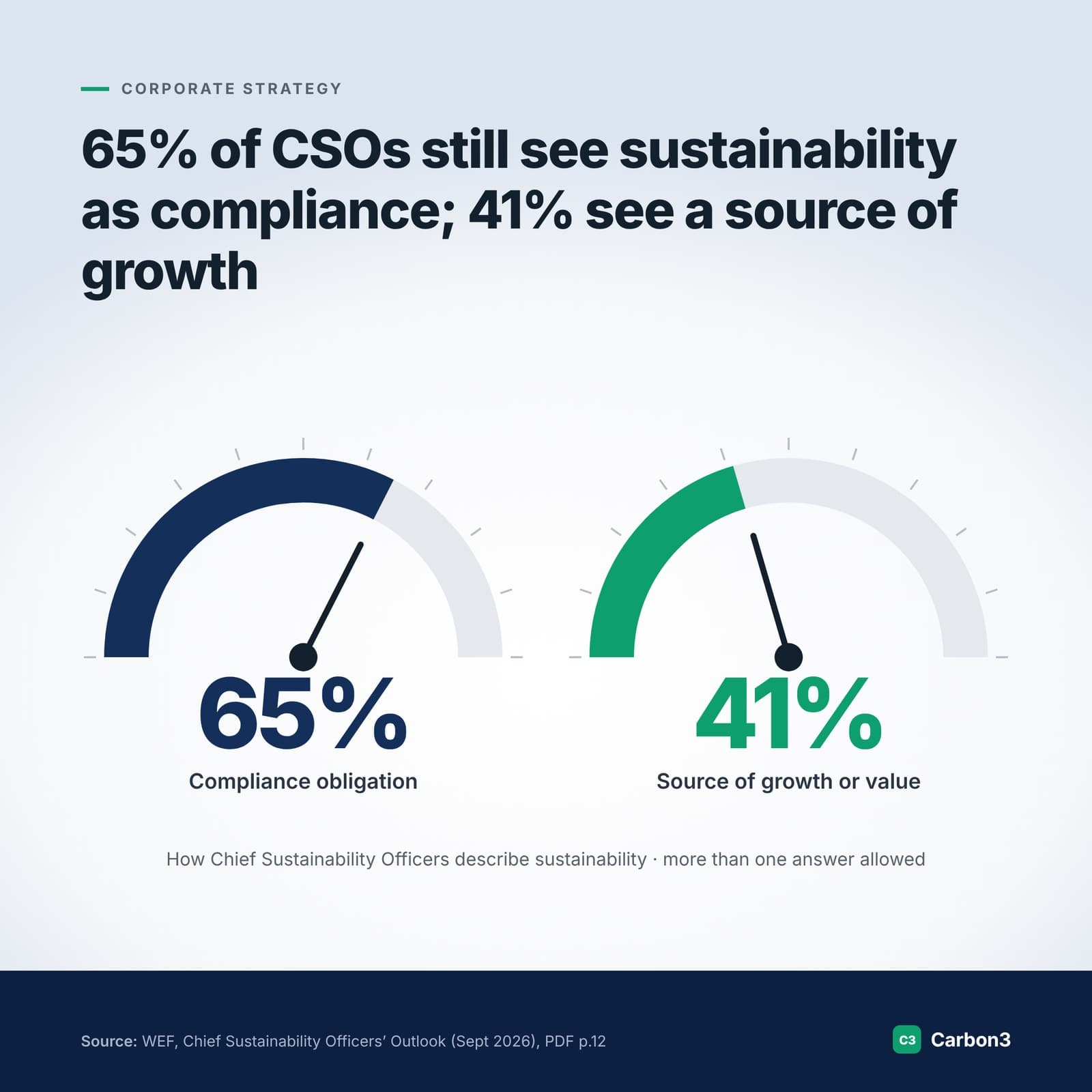
Most CSOs still frame sustainability as compliance.
The World Economic Forum's 2026 Chief Sustainability Officers' Outlook, published in September 2026, asked sustainability leaders how they describe sustainability inside their organizations. 65% of respondents described it primarily as a compliance obligation. 41% selected a source of business growth or value. Respondents could choose more than one answer.
Two framings, two budgets
The framing is not just a matter of language. It shapes what sustainability teams are funded to do.
A compliance view tends to treat Scope 3 as a reporting exercise: measure the number, disclose it, and buy certificates where needed to support a target or a claim. Spend goes to whatever closes the gap on paper at the lowest cost.
A growth view looks at the same footprint differently. Supplier emissions are often a sign of energy use, inefficiency and exposure to fuel and carbon costs. Funding reductions at suppliers can lower cost, reduce energy use and make supply chains more resilient, while also lowering the emissions the company reports.
Why it matters for Scope 3
Scope 3 is often the largest part of a company's footprint and the hardest to move, because the emissions sit with suppliers. Certificates bought elsewhere do not change those emissions. Reductions inside the value chain do.
That is where the gap between the two framings becomes practical. Companies that see sustainability as a source of value are more likely to invest in their suppliers, rather than only in claims.
Making the case with verified projects
For advisors and sustainability leaders trying to move their organizations from the first framing to the second, evidence helps. A business case is easier to make with concrete, checkable projects: a supplier switching fuel, upgrading equipment or changing how it operates, with the reduction measured and verified.
On Carbon3, a value-chain project like this can be independently verified and recorded once as an inset credit, linked to the supplier and the project that delivered it. That gives finance, procurement and sustainability teams a single record of what changed, what it delivered and who funded it.
Insetting is not offsetting. The reduction happens inside the company's own value chain.
Claim treatment depends on the applicable reporting framework.
Source: World Economic Forum, Chief Sustainability Officers' Outlook (September 2026).
Originally published on LinkedIn, 23 October 2026.
The Carbon3 Newsletter
Weekly analysis of industrial decarbonization and insetting across Scope 1 to 3, from the Carbon3 team.
Read more from the research team.
Outlook
Chinese EV exports are being redirected, not disappearing
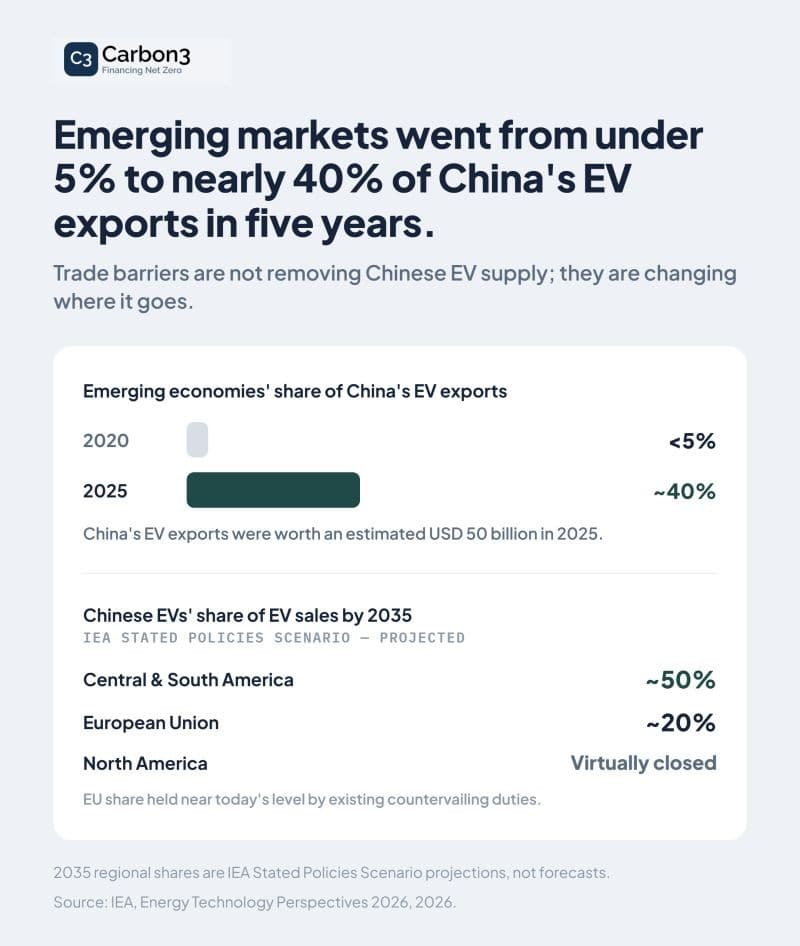
Emerging economies' share of China's EV exports rose from under 5% in 2020 to nearly 40% in 2025, according to the IEA.
Read the articleOutlook
The hydrogen projects that start by 2030 are being decided in the coming months
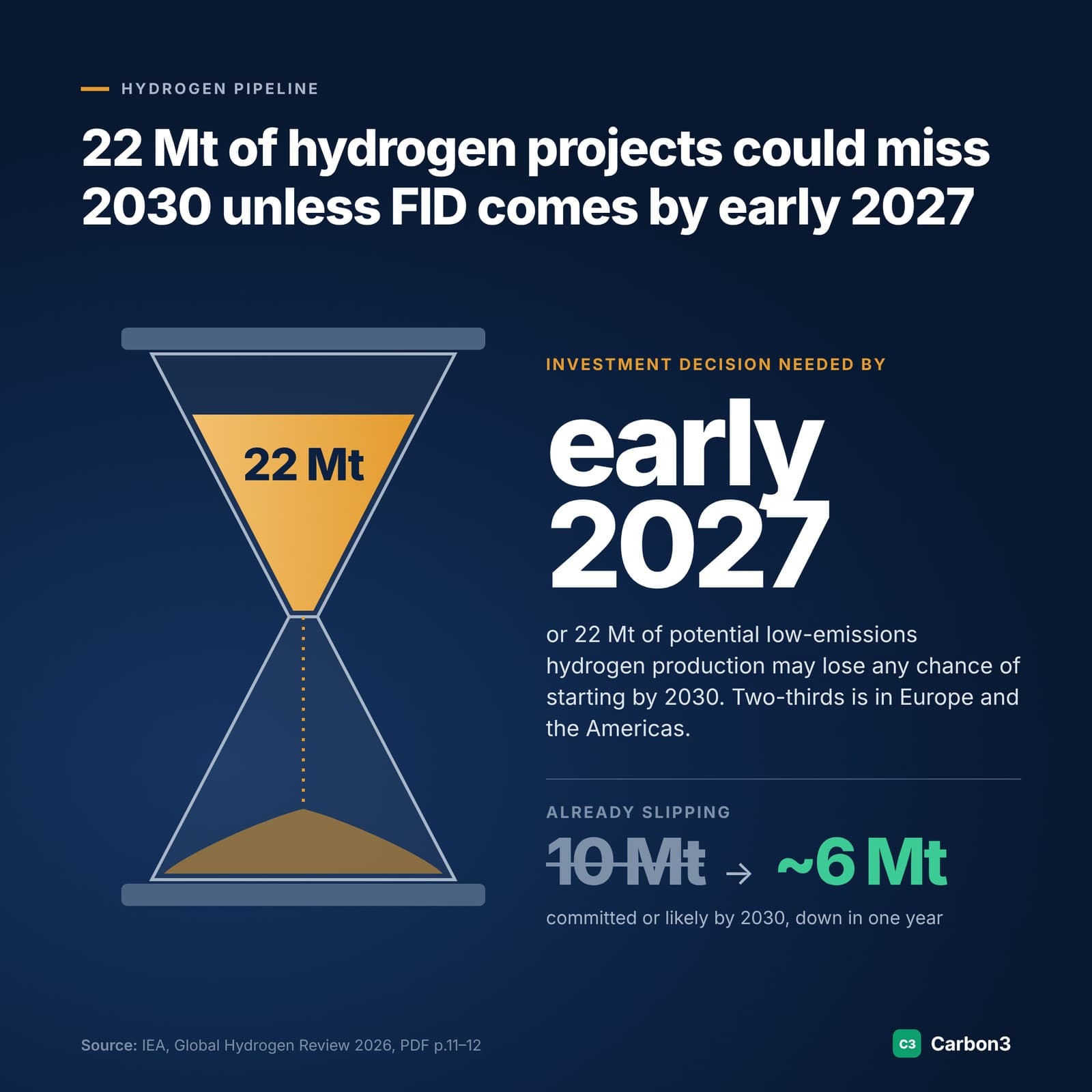
The IEA estimates 22 Mt of announced low-emissions hydrogen production may miss 2030 if investment decisions are not taken by early 2027.
Read the articleClaims & reporting
A proof of sustainability settles compliance but does not carry a Scope 3 claim
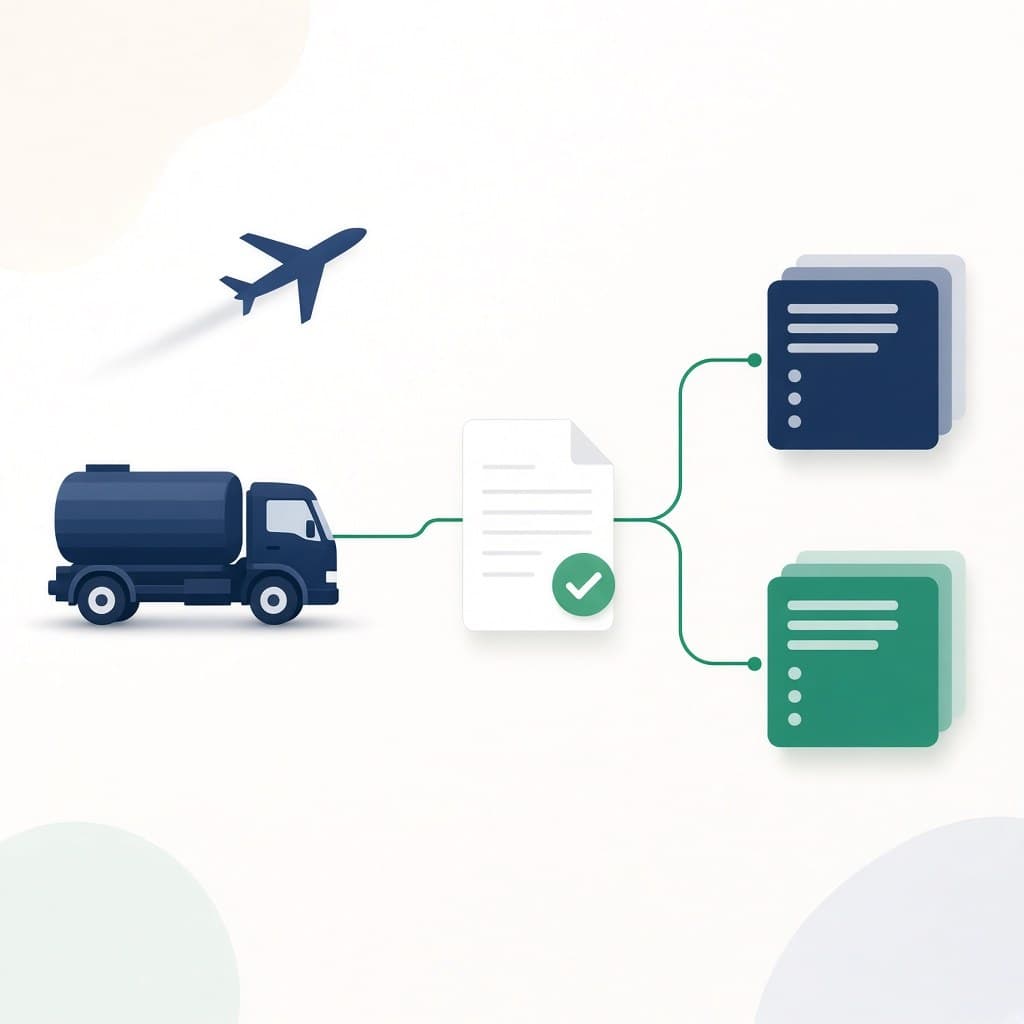
The EU's Union Database gives every renewable fuel batch a common record.
Read the article
See the companies behind these figures in the Data Hub.
Look up your suppliers’ emissions and targets, free.