None of 20 supermarket giants reports methane in its supply chain
Changing Markets Foundation's Methane Action Tracker finds that none of the 20 largest retailers it assessed reports supply-chain methane or has a target to reduce it.
By Carbon3 team2 min read
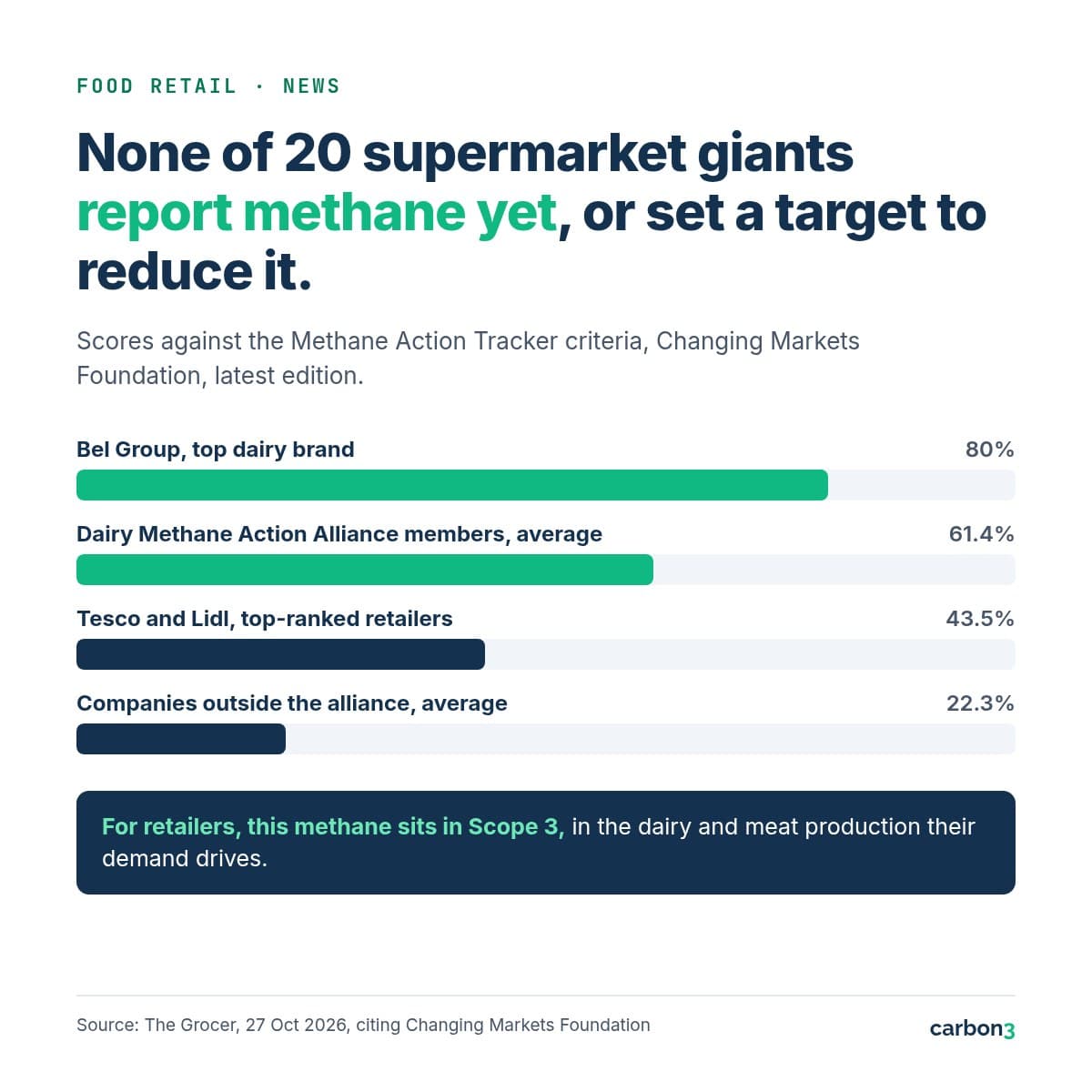
None of the 20 supermarket giants assessed in Changing Markets Foundation's latest Methane Action Tracker reports methane or has a methane reduction target for its supply chain. Seven of them, including Casino and Walmart, do not recognize methane as an issue at all, according to the NGO, as reported by The Grocer.
Retailers lag dairy and coffee brands
Even the best-performing retailers scored low. Tesco and Lidl ranked joint first among supermarkets, but they scored just 43.5% against the tracker's criteria.
Dairy and coffee brands did far better. Members of the Dairy Methane Action Alliance averaged 61.4%, up from 45.9% in the previous edition, while non-members averaged 22.3%. Bel Group led the ranking with 80%, overtaking Danone.
The gap suggests that joining a sector initiative and committing publicly to methane action goes together with measurable progress in disclosure and planning.
Where retail methane sits
For retailers, this methane sits upstream in Scope 3, the indirect emissions in a company's value chain. It comes from the dairy and meat production that their demand drives, rather than from their own stores or logistics.
Changing Markets says retailers have the leverage to shift those supply chains toward lower-methane options. It also notes that the EU's revised Corporate Sustainability Reporting Directive will put large food companies under closer scrutiny from 2028, which gives retailers a clear reason to start measuring supply-chain methane now.
Financing reductions at the farm
In Carbon3's view, measured methane reductions at supplier farms are the kind of outcome retailers could help finance through insetting, which funds emissions reductions inside a company's own value chain. Insetting is not offsetting, and the difference is explained at carbon3.net/insets-vs-offsets.
When those reductions are independently verified, credits are issued to the project developer, and Carbon3 records them once in its registry as inset credits. Each reduction then has a single owner and a single claim, which helps retailers, suppliers and auditors work from the same record.
Claim treatment depends on the applicable reporting framework.
Source: The Grocer (27 October 2026).
Originally published on LinkedIn, 28 October 2026.
The Carbon3 Newsletter
Weekly analysis of industrial decarbonization and insetting across Scope 1 to 3, from the Carbon3 team.
Read more from the research team.
Sector: Agriculture
When a food company co-funds change on its own supplier farms
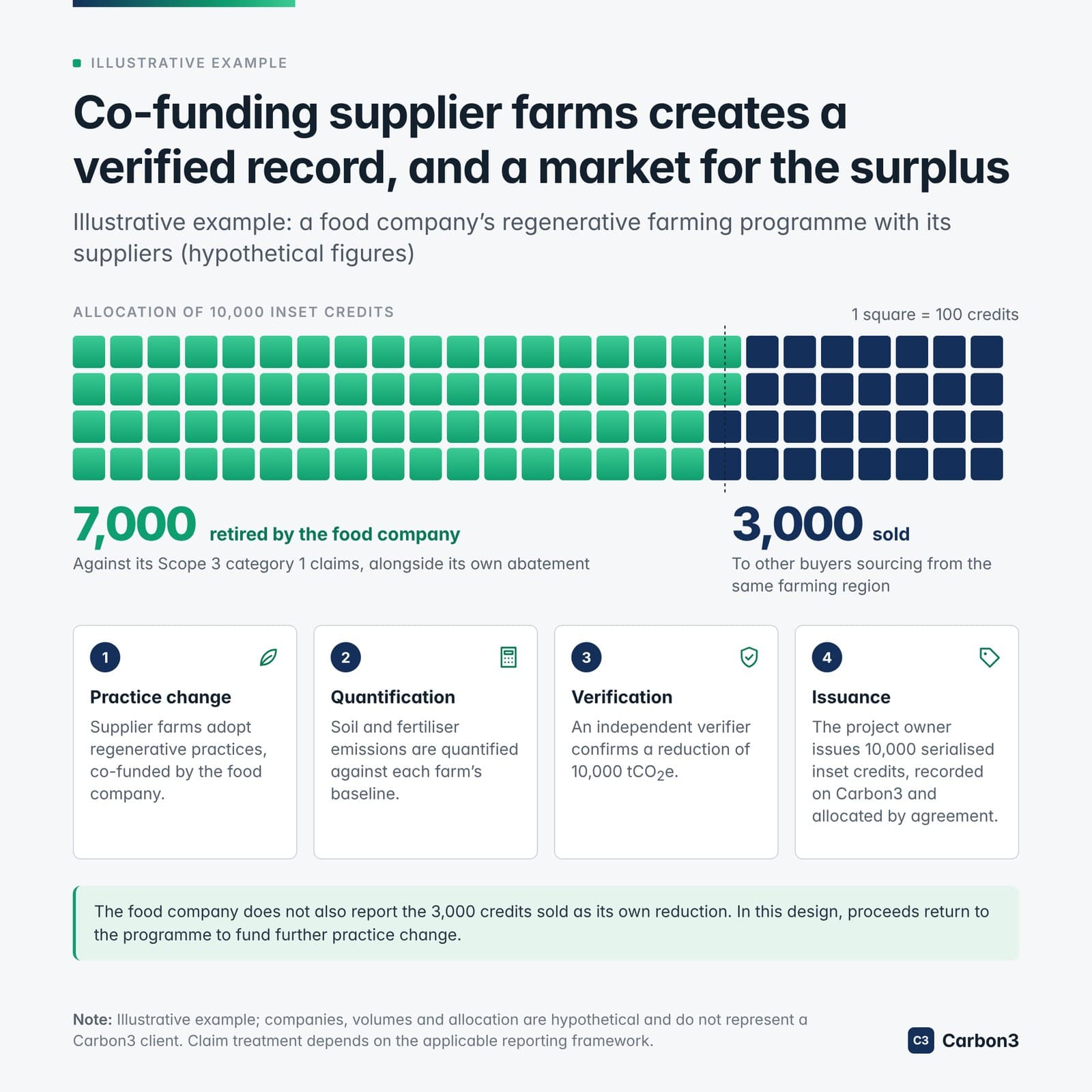
An illustrative example: 10,000 inset credits from regenerative practices, 7,000 retired against Scope 3 claims, 3,000 sold to regional buyers, and every tonne counted once.
Read the articleSector: Agriculture
Fertilizer has become a supply-chain risk for food companies
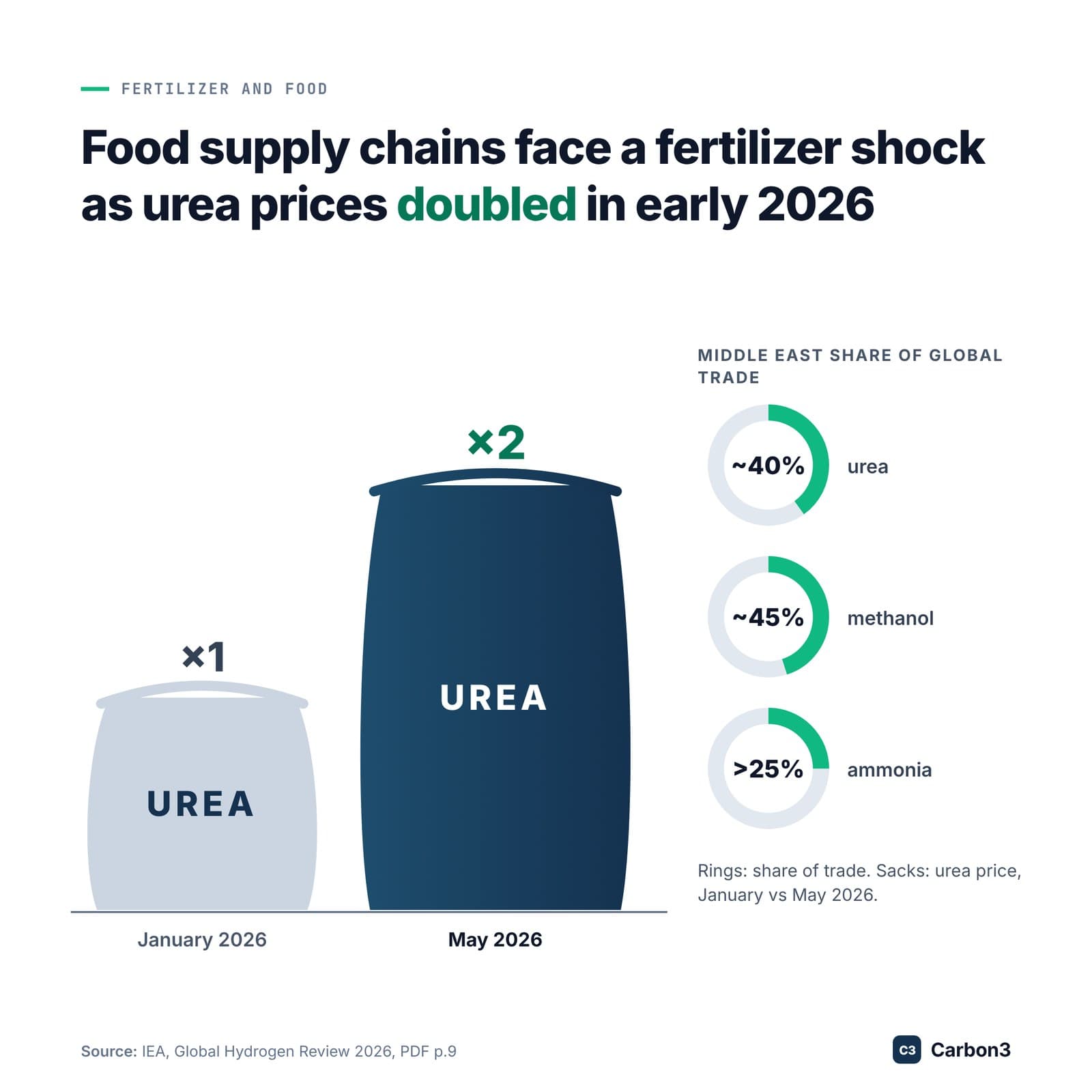
The IEA reports that urea prices doubled between January and May 2026, which puts fertilizer in both the cost base and the Scope 3 inventory of agri-food buyers.
Read the articleMarket structure
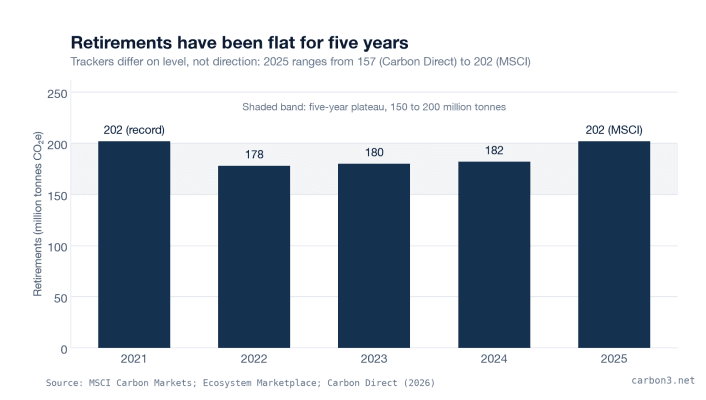
Carbon markets 2026: flat on the surface, splitting underneath
Where the voluntary carbon market and corporate supply-chain climate action are heading, based on registry data, new standards and disclosed deals.
Read the article
See the companies behind these figures in the Data Hub.
Look up your suppliers’ emissions and targets, free.