Fertilizer has become a supply-chain risk for food companies
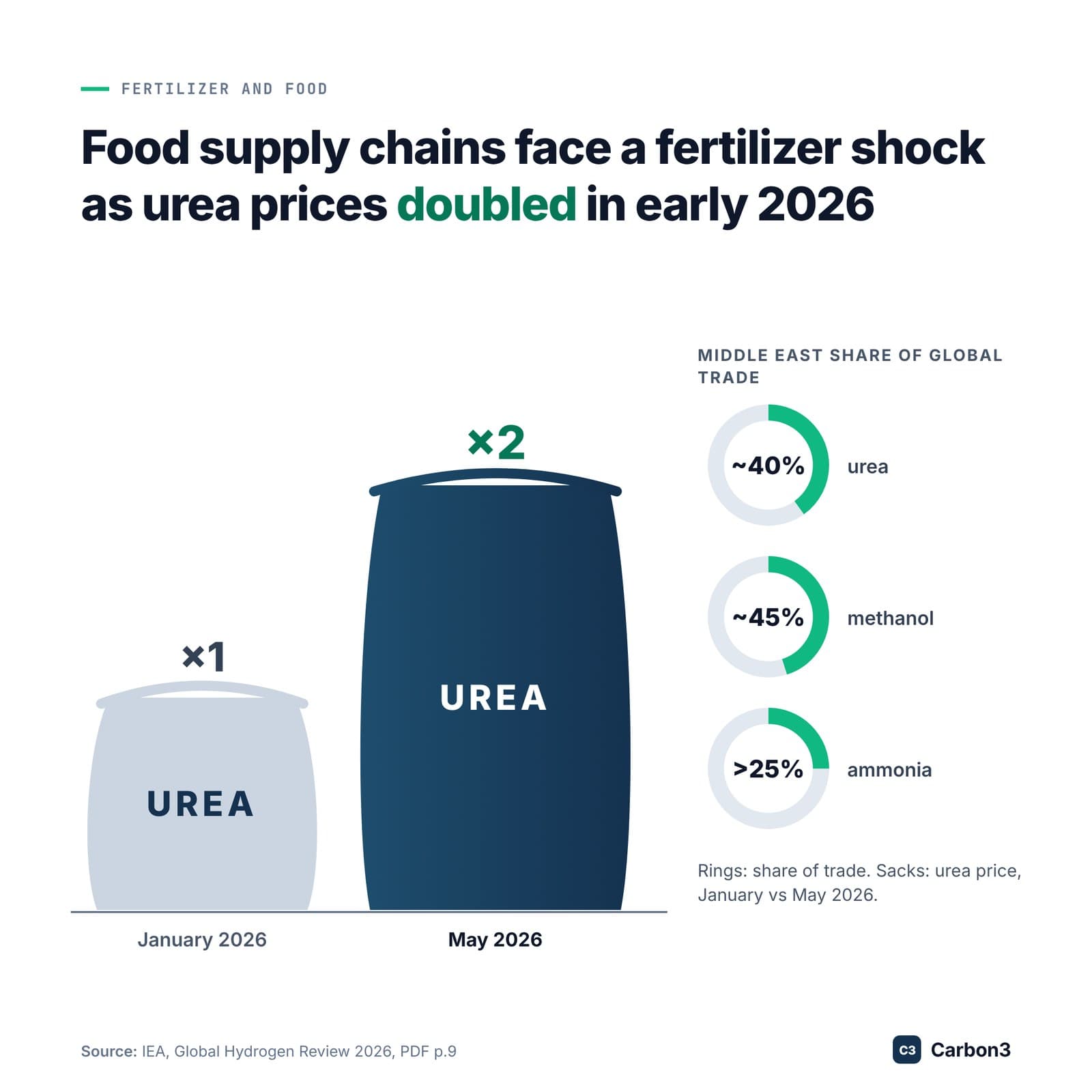
The IEA reports that urea prices doubled between January and May 2026, which puts fertilizer in both the cost base and the Scope 3 inventory of agri-food buyers.
By Carbon3 team2 min read
For food companies, fertilizer is no longer just an input cost in the background. In 2026 it has become a supply-chain risk for food companies, and one that shows up in both the cost base and the emissions inventory.
What the IEA reports
In its Global Hydrogen Review 2026, the International Energy Agency (IEA) reports that urea prices doubled between January and May 2026. Conflict in the Middle East disrupted both production and trade in the region.
The exposure is large because the Middle East plays a central role in these markets. The region accounts for almost 40% of global urea trade, over a quarter of ammonia trade and almost 45% of methanol trade. When supply from the region is disrupted, buyers around the world feel it.
The IEA also notes that fertilizer production costs have risen worldwide. Farmers cannot simply respond by using less, because even modest reductions in fertilizer use can reduce crop yields. Higher input costs therefore tend to pass along the chain rather than disappear.
Why it matters for agri-food buyers
For food and beverage companies, fertilizer sits in two places at once. It drives part of the cost of the crops they buy, and it is part of the Scope 3 emissions inventory of their supply chains.
That overlap means the same action can address both risks. Supporting suppliers to move away from fertilizer that depends on volatile, emissions-heavy supply can make sourcing more resilient while reducing emissions.
What companies can do now
Two practical routes stand out. One is co-funding low-emission ammonia, so that the fertilizer reaching suppliers is produced with lower emissions. The other is supporting more efficient fertilizer use at the farms that grow key ingredients, so that less input is needed for the same harvest.
Either way, the work happens inside the value chain the company already depends on. This is insetting, not offsetting. The emissions reductions come from the company's own suppliers, not from an unrelated project elsewhere.
When those reductions are verified and recorded once as inset credits, they stay linked to the supply chain they came from and cannot be claimed twice. Credits are issued to the project developer after independent verification, and Carbon3 records them in its registry, so suppliers, buyers and auditors can see who holds each claim.
For agri-food buyers watching fertilizer prices swing, that turns a source of cost pressure into a lever they can act on.
Claim treatment depends on the applicable reporting framework.
Source: IEA, Global Hydrogen Review 2026.
Originally published on LinkedIn, 28 October 2026.
The Carbon3 Newsletter
Weekly analysis of industrial decarbonization and insetting across Scope 1 to 3, from the Carbon3 team.
Read more from the research team.
Sector: Agriculture
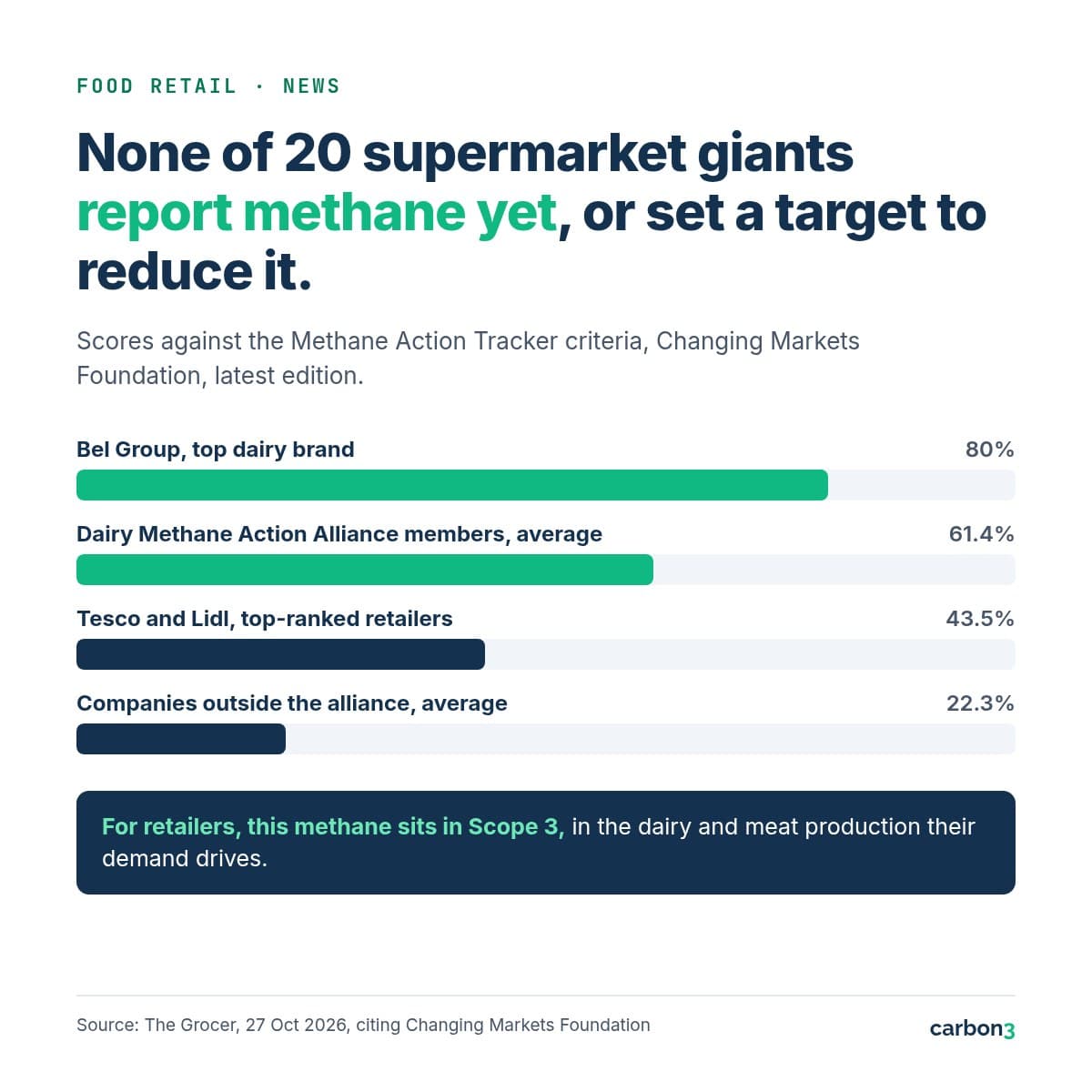
None of 20 supermarket giants reports methane in its supply chain
Changing Markets Foundation's Methane Action Tracker finds that none of the 20 largest retailers it assessed reports supply-chain methane or has a target to reduce it.
Read the articleSector: Agriculture
Yara: cost discipline and decarbonization as one agenda
Record operational performance alongside 42.6 million tCO2e of Scope 3.
Read the articleTransition finance
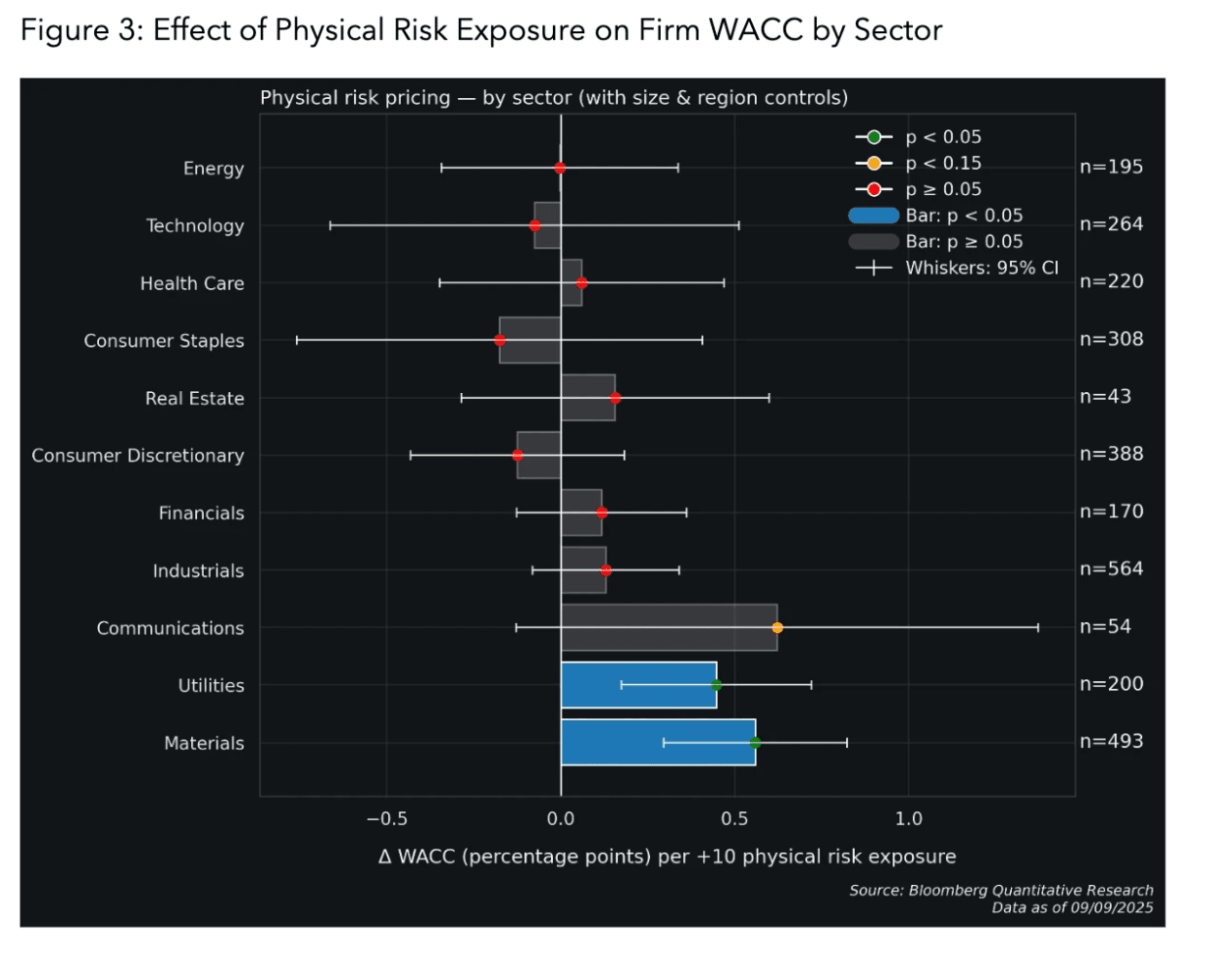
Climate risk now carries a cost. Supply chain resilience can lower it.
Bloomberg finds companies with higher physical climate exposure face a 22 bps increase in WACC.
Read the article
See the companies behind these figures in the Data Hub.
Look up your suppliers’ emissions and targets, free.