Silicon wafer emissions are mostly a power problem, with about 75% from electricity
RMI's work with Hemlock, SEH America, Micron and Microsoft finds that clean power and low-carbon silicon could reduce mine-to-wafer emissions by an estimated 77%.
By Carbon3 team2 min read
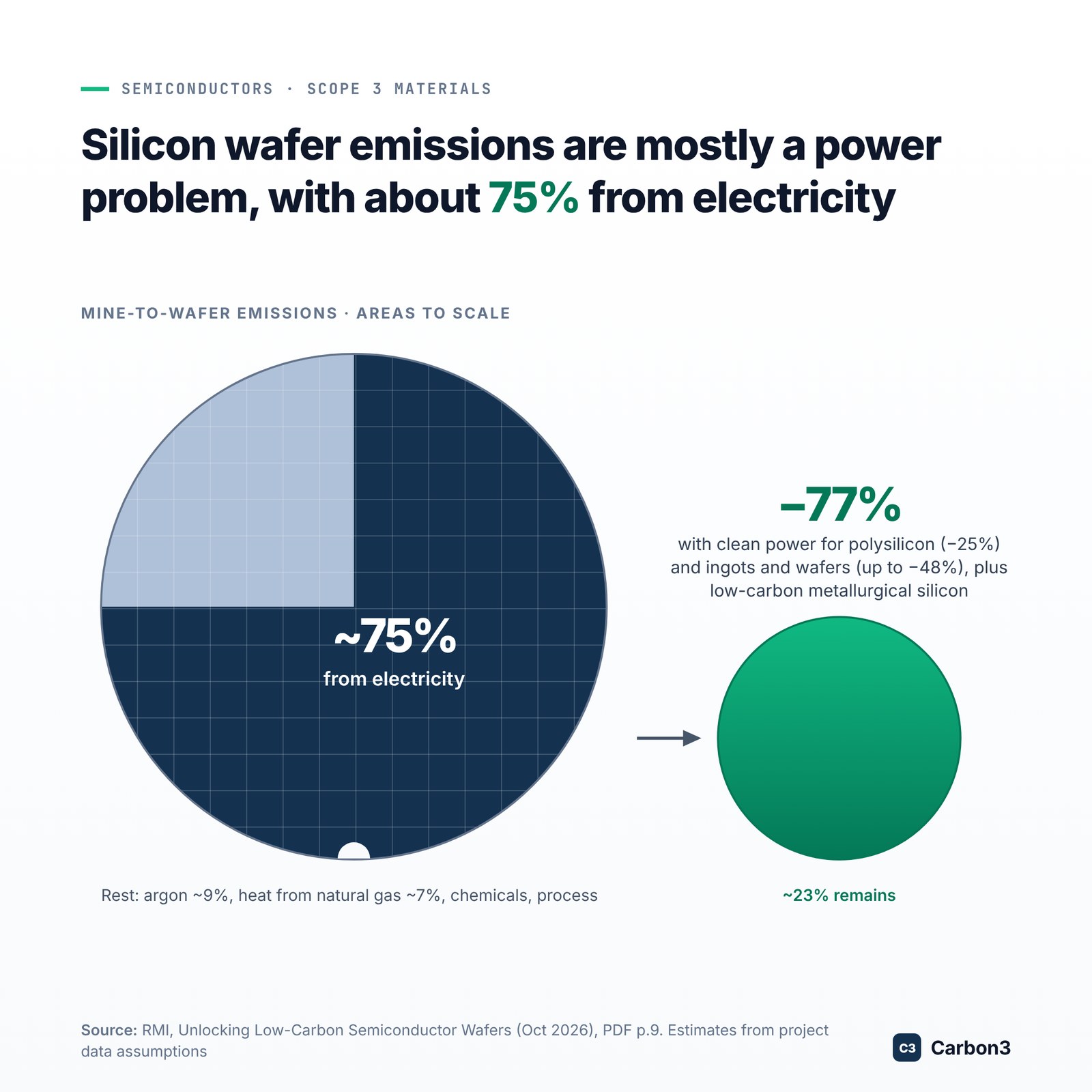
Work by RMI with Hemlock Semiconductor, SEH America, Micron and Microsoft finds that electricity accounts for about 75% of the emissions in making a silicon wafer, from the mine to the finished wafer. For the chip industry, that turns a hard-looking carbon problem into a mostly familiar one: where the power comes from.
A power problem sitting in Scope 3
The rest of the footprint is spread across smaller sources. RMI's estimates put argon at about 9% and heat from natural gas at about 7%, with chemicals and process emissions making up the remainder. Electricity dominates because refining polysilicon and growing ingots are energy-hungry steps.
The companies that buy chips carry these emissions in Scope 3, the emissions in their value chain. They usually sit several tiers away from the plants that refine silicon and cut wafers, so they have little direct say over which grid those plants draw from.
How far clean power could go
RMI estimates that clean power for polysilicon refining alone could reduce mine-to-wafer emissions by about 25%. Clean power for ingot and wafer production adds a larger share, and once low-carbon metallurgical silicon is included, the combined reduction reaches an estimated 77%, leaving roughly 23% of today's footprint. These are estimates built on project data assumptions, not measured results from a finished supply chain.
The point for buyers is that most of the reduction is available with technology that already exists. What is missing is a way for a chip buyer to pay for it.
Paying for wafers that cannot be traced
Silicon from many plants is mixed long before it reaches a chip, so a buyer cannot follow its own molecules back to a cleaner wafer plant. RMI proposes book and claim as the answer: buyers fund low-carbon wafers and receive a claim to the reduction, even though the physical product they receive comes from the general supply.
That approach only works if each reduction is recorded once. Insetting, which means financing emissions reductions in a company's own value chain, depends on that single record. Once a reduction has been checked against a verification report, the project developer issues inset credits on the Carbon3 registry, so the same reduction is not claimed by two buyers. This is insetting, not offsetting, and the difference is explained at carbon3.net/insets-vs-offsets.
Claim treatment depends on the applicable reporting framework.
The open question is whether chip buyers will pay for clean power at wafer plants they will never see.
Source: RMI, "Unlocking Low-Carbon Semiconductor Wafers" (October 2026).
Learn more
How a buyer reports inset credits
Originally published on LinkedIn, 1 November 2026.
Read more from the research team.
Claims & reporting
A proof of sustainability settles compliance but does not carry a Scope 3 claim
The EU's Union Database gives every renewable fuel batch a common record.
Read the articleClaims & reporting
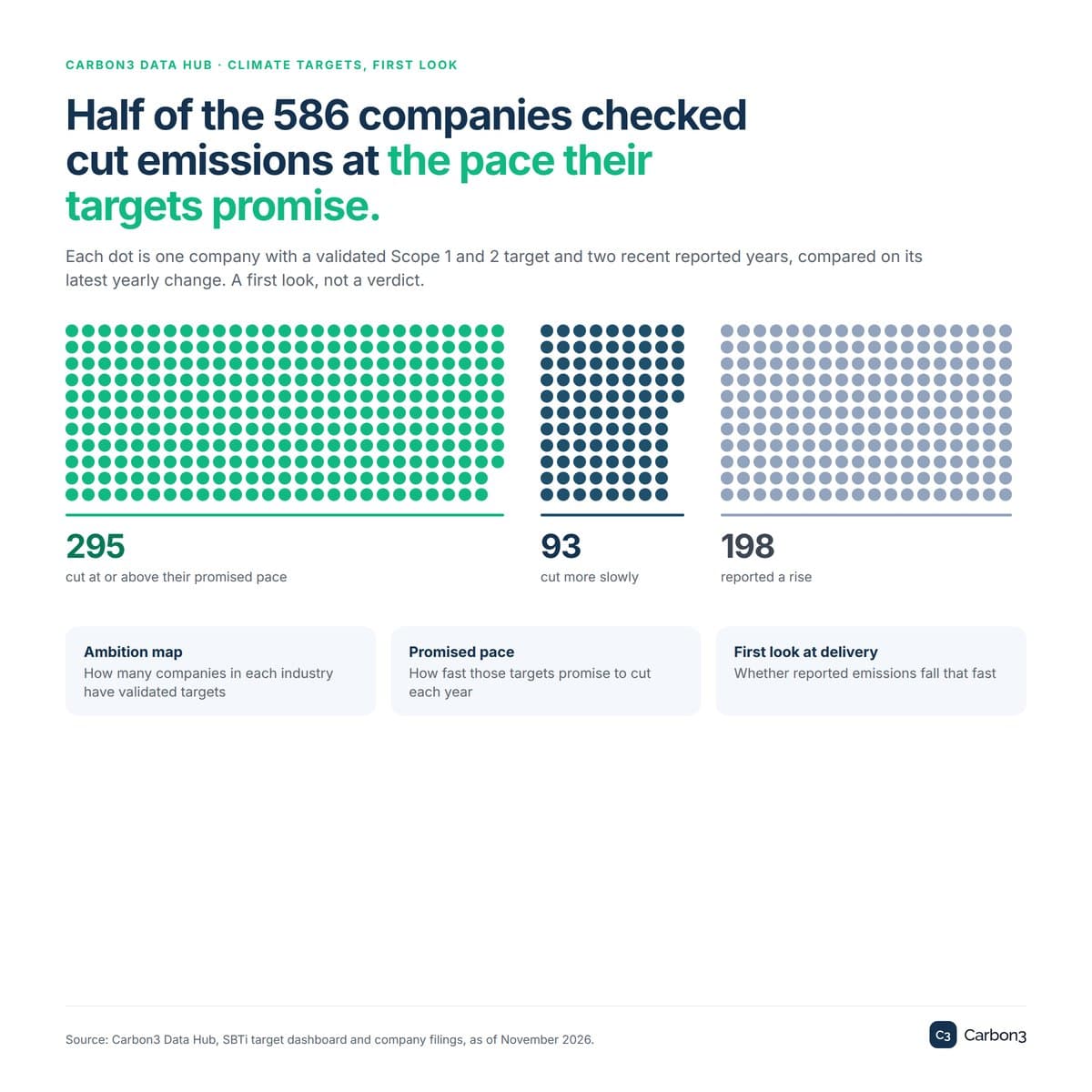
Half of the companies checked are reducing emissions at the pace their climate targets promise
Carbon3 compared about 7,200 companies on the SBTi registry three ways: how many have climate targets, how fast those targets promise to cut and whether reported emissions are falling that fast.
Read the articleSector: Aviation
Not every liter of sustainable aviation fuel does the same climate work
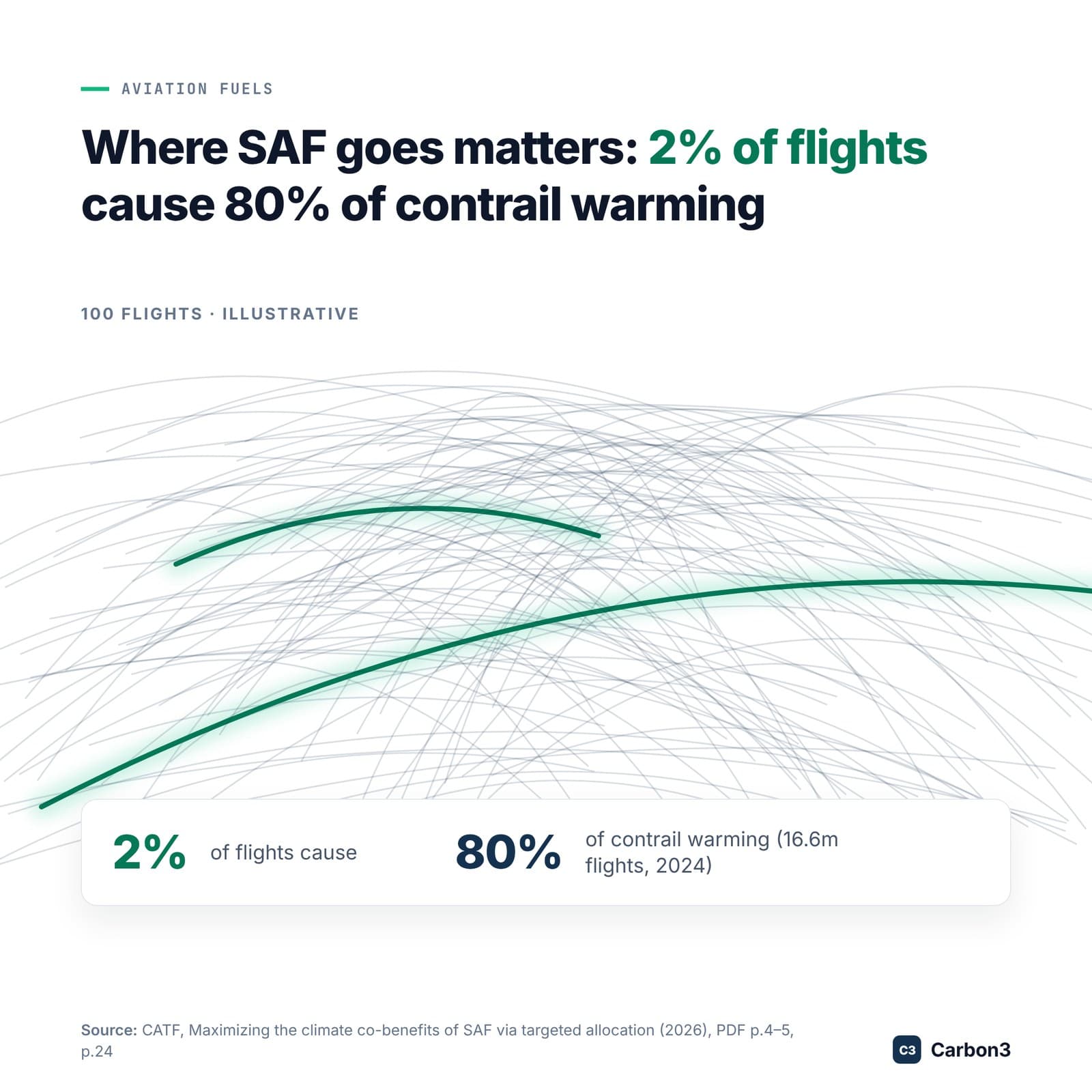
Clean Air Task Force finds about 2% of flights cause 80% of contrail-related warming, which makes where scarce SAF is burned, and how it is traced, matter for Scope 3 buyers.
Read the article

See the companies behind these figures in the Data Hub.
Look up your suppliers’ emissions and targets, free.