FuelEU counts e-fuels twice until 2033, and a 2% e-fuel subtarget can follow in 2034
Article 5 of FuelEU Maritime doubles the weight of RFNBO energy from 2025 to 2033. If the 2031 share is below 1%, a conditional 2% subtarget applies to each ship from 2034.
By Carbon3 team2 min read
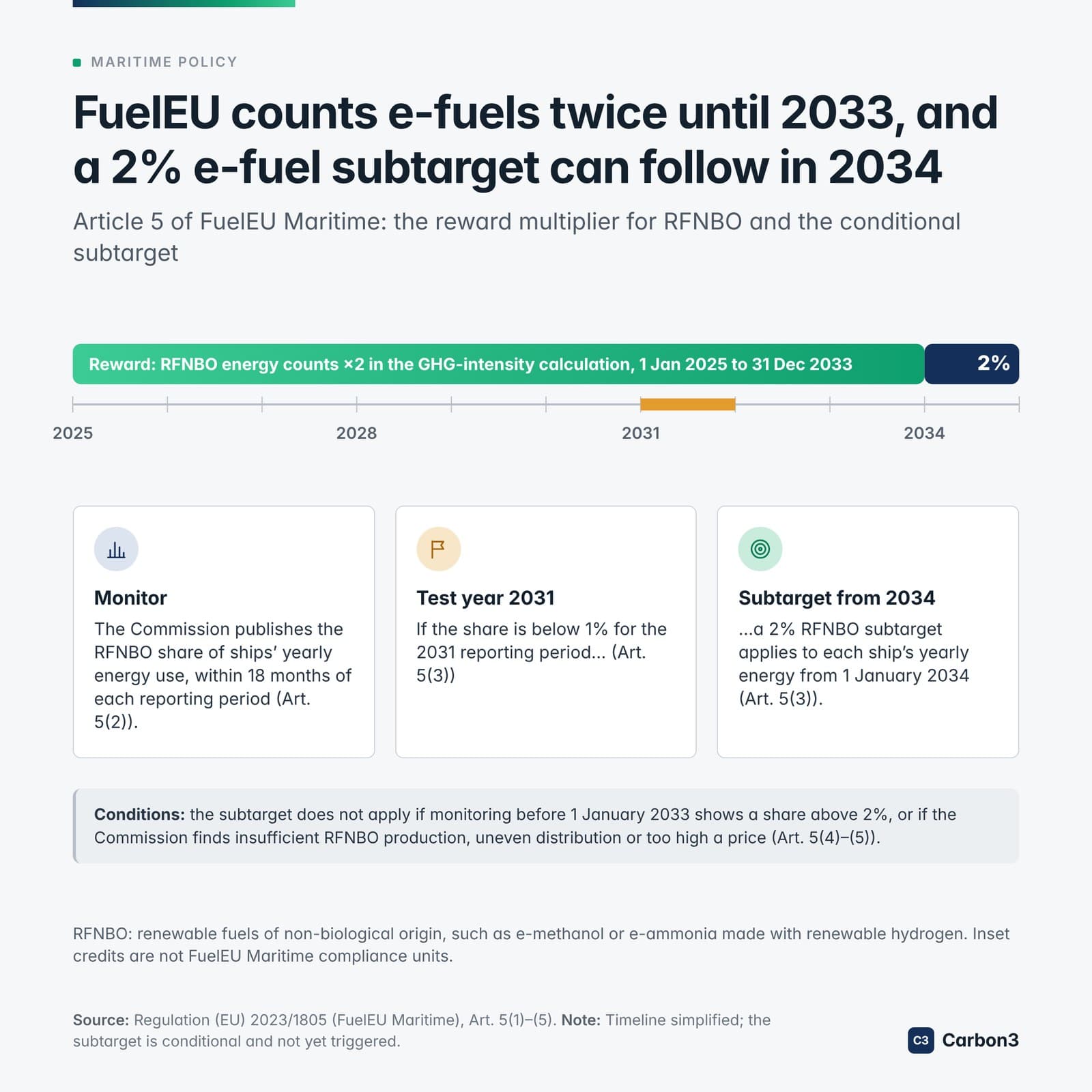
E-fuels carry a double weighting in FuelEU Maritime, but only until the end of 2033. After that, a separate rule may take over: a mandatory share of e-fuels for every ship, triggered only if the market has not moved far enough by 2031. Together, the two provisions in Article 5 of the regulation set the timetable that e-fuel developers and their offtakers are working to.
The reward window: 2025 to 2033
FuelEU Maritime (Regulation (EU) 2023/1805) limits the greenhouse gas intensity of the energy ships use. Article 5 treats one group of fuels differently: renewable fuels of non-biological origin, or RFNBO, such as e-methanol or e-ammonia made with renewable hydrogen.
From 1 January 2025 to 31 December 2033, energy from RFNBO can count twice in a ship's GHG-intensity calculation. For a ship operator, that multiplier makes each tonne of e-fuel worth more toward compliance than its energy content alone would suggest. It is a deliberate incentive for early uptake, and it has a fixed end date.
The 2031 test
The regulation pairs the reward with monitoring. The Commission publishes the RFNBO share of ships' yearly energy use within 18 months of each reporting period.
The 2031 reporting period is the test. If the RFNBO share for that year is below 1%, a 2% RFNBO subtarget applies to each ship's yearly energy from 1 January 2034.
The subtarget is conditional. It does not apply if monitoring before 1 January 2033 shows a share above 2%. It also does not apply if the Commission finds insufficient RFNBO production, uneven distribution, or too high a price. As things stand, the subtarget has not been triggered.
What the timetable means for e-fuel projects
For e-fuel developers and their offtakers, the reward window and the 2031 test year frame the business case. Volumes delivered before the end of 2033 benefit from the double weighting. The 2031 share then decides whether demand from 2034 onward is supported by a per-ship requirement or left to the market and the regulation's other provisions.
That makes the years before 2031 the period in which early volumes need to be financed and delivered.
Where cargo owners fit
Cargo owners that co-fund early volumes can hold a verified record of the resulting reduction through inset credits. Those credits sit alongside the regulation rather than inside it: inset credits are not FuelEU Maritime compliance units, and the ship operator's FuelEU position is calculated under the regulation's own rules. Carbon3 works on the record-keeping that lets each verified reduction be issued, transferred and retired once. Claim treatment depends on the applicable reporting framework.
Source: Regulation (EU) 2023/1805 (FuelEU Maritime), Art. 5(1) to 5(5). The timeline is simplified, and the subtarget is conditional and not yet triggered.
Originally published on LinkedIn, 18 October 2026.
The Carbon3 Newsletter
Weekly analysis of industrial decarbonization and insetting across Scope 1 to 3, from the Carbon3 team.
Read more from the research team.
Sector: Maritime
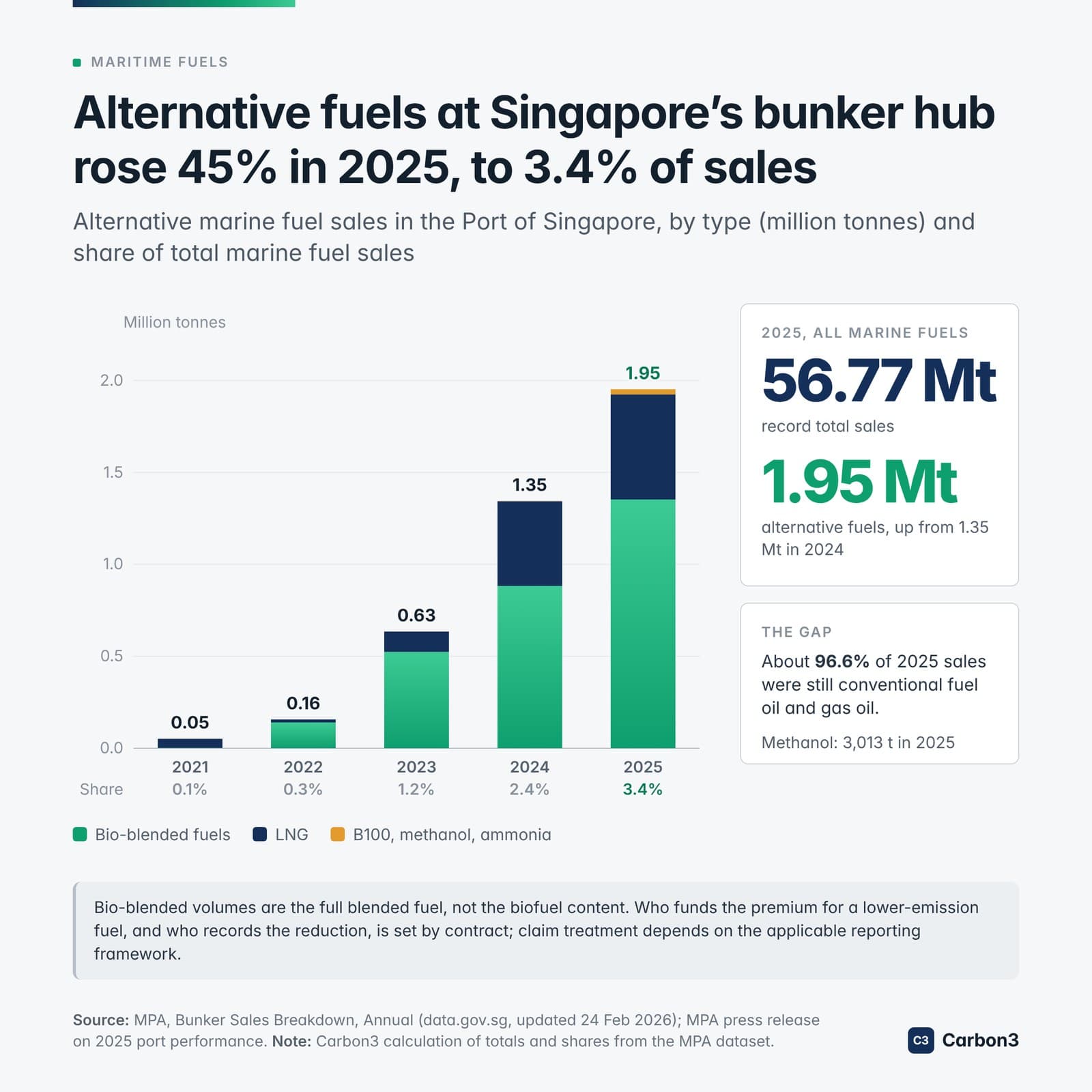
Singapore sold 1.95 million tonnes of alternative marine fuels in 2025
MPA data show a 45% rise on 2024, led by bio-blended fuels and LNG.
Read the articleSector: Maritime
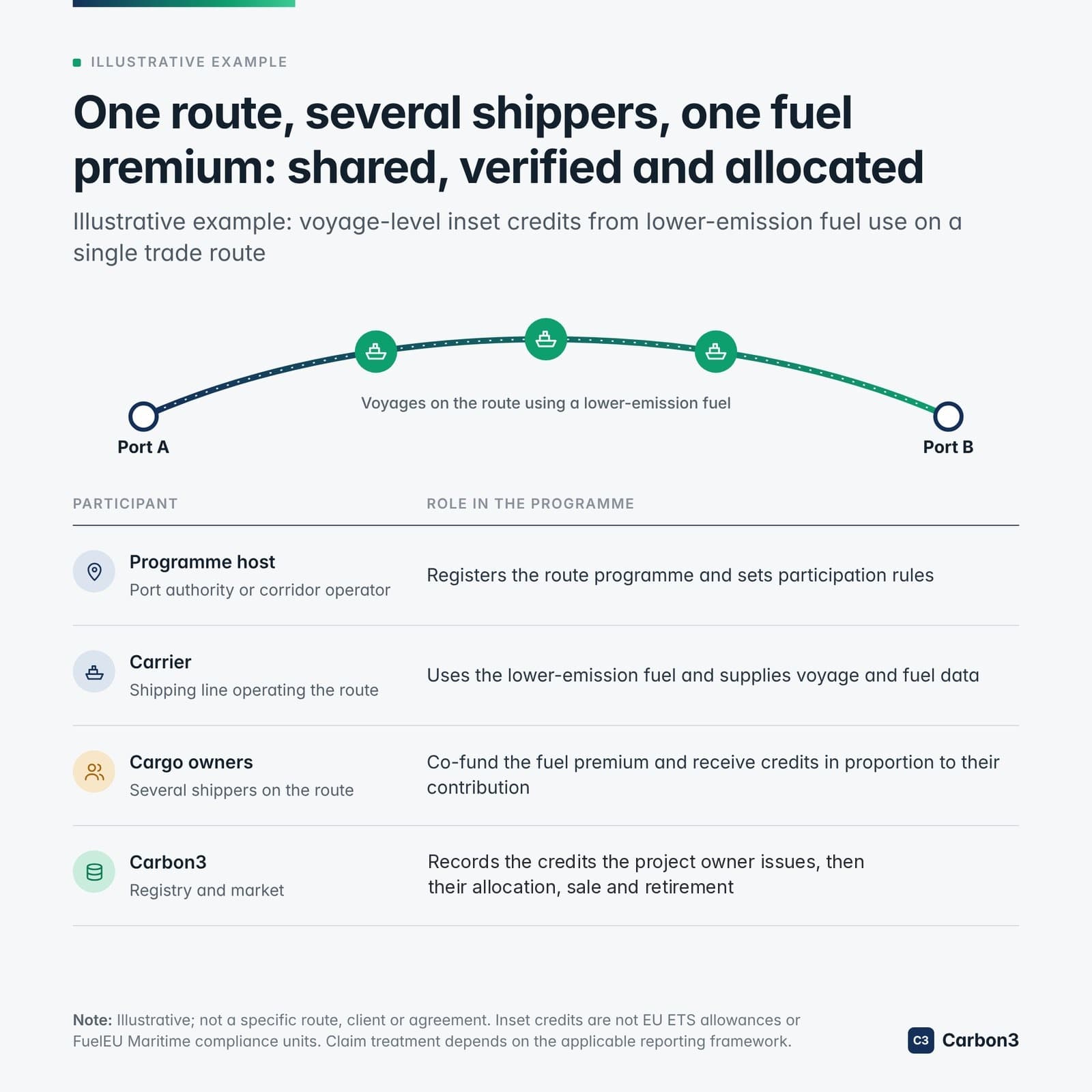
One trade route, several shippers, one fuel premium, shared and verified
An illustrative route program: cargo owners co-fund a carrier's lower-emission fuel, voyage-level inset credits are issued after verification, and each shipper receives its share.
Read the articleSector: Maritime
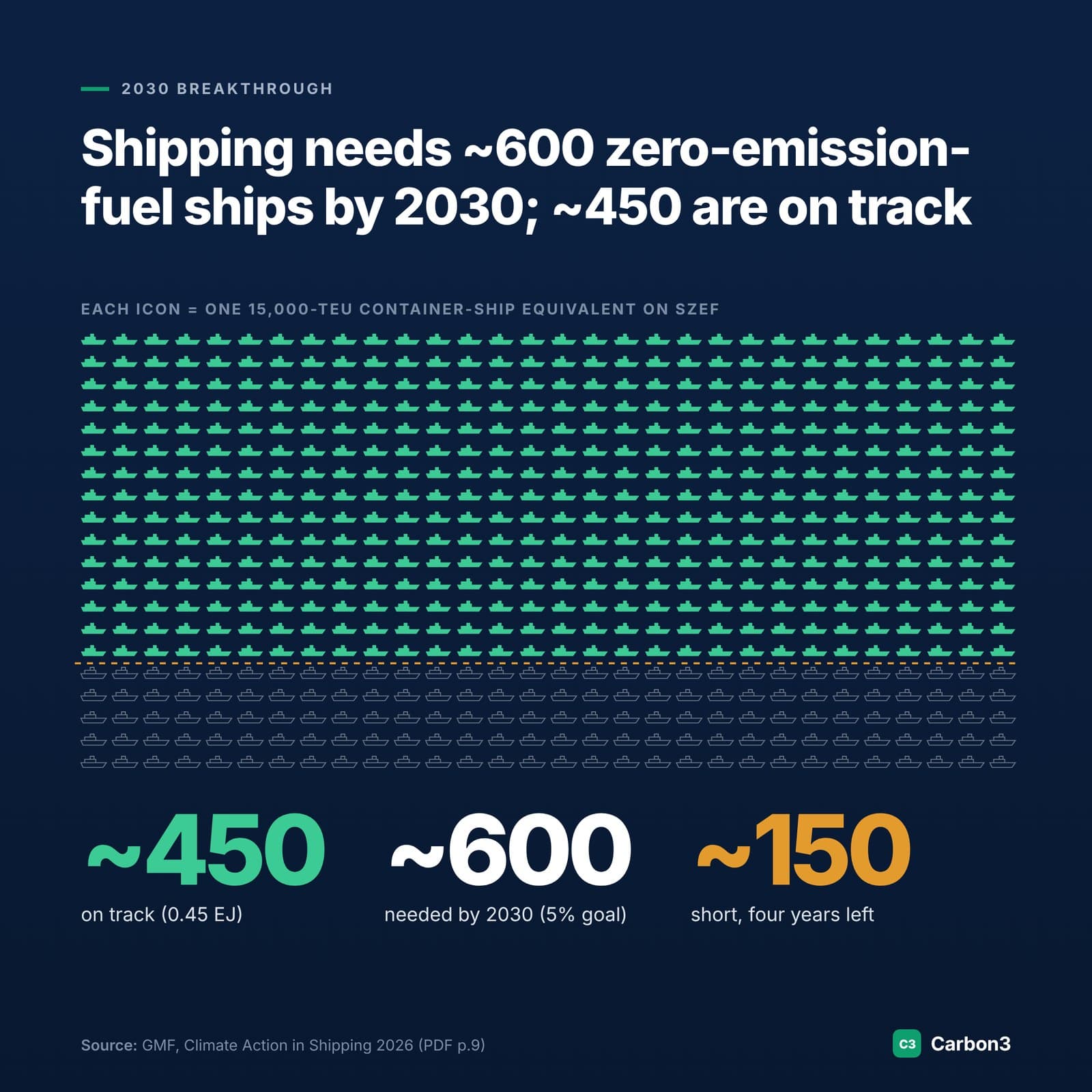
Shipping's 2030 fuel goal is about 150 ships short, with four years left
The Global Maritime Forum estimates the 5% breakthrough goal needs about 600 large container ship equivalents on scalable zero-emission fuels by 2030.
Read the article
See the companies behind these figures in the Data Hub.
Look up your suppliers’ emissions and targets, free.