Japan will build its first ammonia-fueled car carriers, with their own fuel supply
Seven Japanese companies, including NYK, K Line and JERA, plan four ammonia-fueled car carriers for 2030, built together with the green ammonia supply and bunkering needed to run them.
By Carbon3 team2 min read
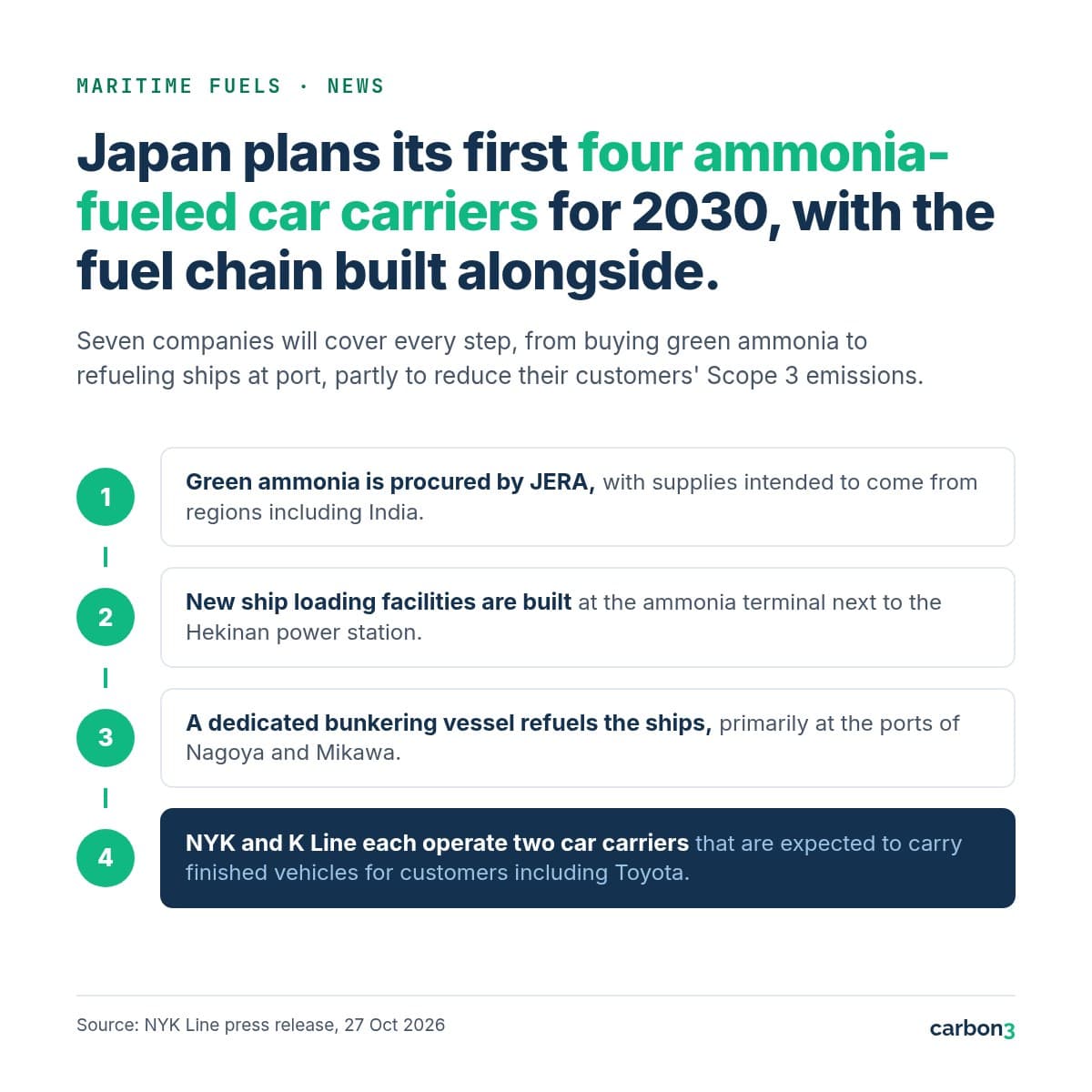
Seven Japanese companies, including NYK, K Line and JERA, announced on 27 October that they will build Japan's first ammonia-fueled car carriers. They will also build the fuel supply chain needed to run them.
Four ships and a fuel chain
NYK and K Line will each operate two of the four ships. The vessels are scheduled for completion in 2030 and are expected to carry finished vehicles for customers including Toyota.
The project covers more than the ships themselves. JERA will procure green ammonia, with supplies intended to come from regions including India. A dedicated bunkering vessel will refuel the carriers, primarily at the ports of Nagoya and Mikawa.
Building the ships and the fuel supply together tackles a common problem with new marine fuels. Shipowners hesitate to order vessels that run on a fuel nobody supplies, and fuel suppliers hesitate to invest before there are ships to buy from them. A project that plans both sides at once removes part of that uncertainty.
Why cargo owners are part of the story
The companies say the project is meant to reduce emissions from international shipping as well as their customers' Scope 3 emissions, the indirect emissions in a company's value chain.
For car makers and other cargo owners, that second point matters. The emissions from shipping their finished goods sit in their own Scope 3 inventories. Lower-emission voyages can help them make progress on their targets, but only if they can show what share of the reductions is theirs.
Data first, then claims
In Carbon3's view, cargo owners will need verified, per-voyage emissions data before they can claim their share of those reductions. Without it, it is hard to link a specific shipment to a specific reduction.
Insetting offers a way to connect the two. It finances emissions reductions inside a company's own value chain, rather than in unrelated projects elsewhere, which is what sets it apart from offsetting. Through insetting, shippers can co-finance fuel switches like this one and claim each reduction only once, so carriers and their customers do not count the same reduction twice.
Claim treatment depends on the applicable reporting framework.
Originally published on LinkedIn, 27 October 2026.
The Carbon3 Newsletter
Weekly analysis of industrial decarbonization and insetting across Scope 1 to 3, from the Carbon3 team.
Read more from the research team.
Sector: Maritime
Port of Santos moves ethanol bunkering from trial to regular supply
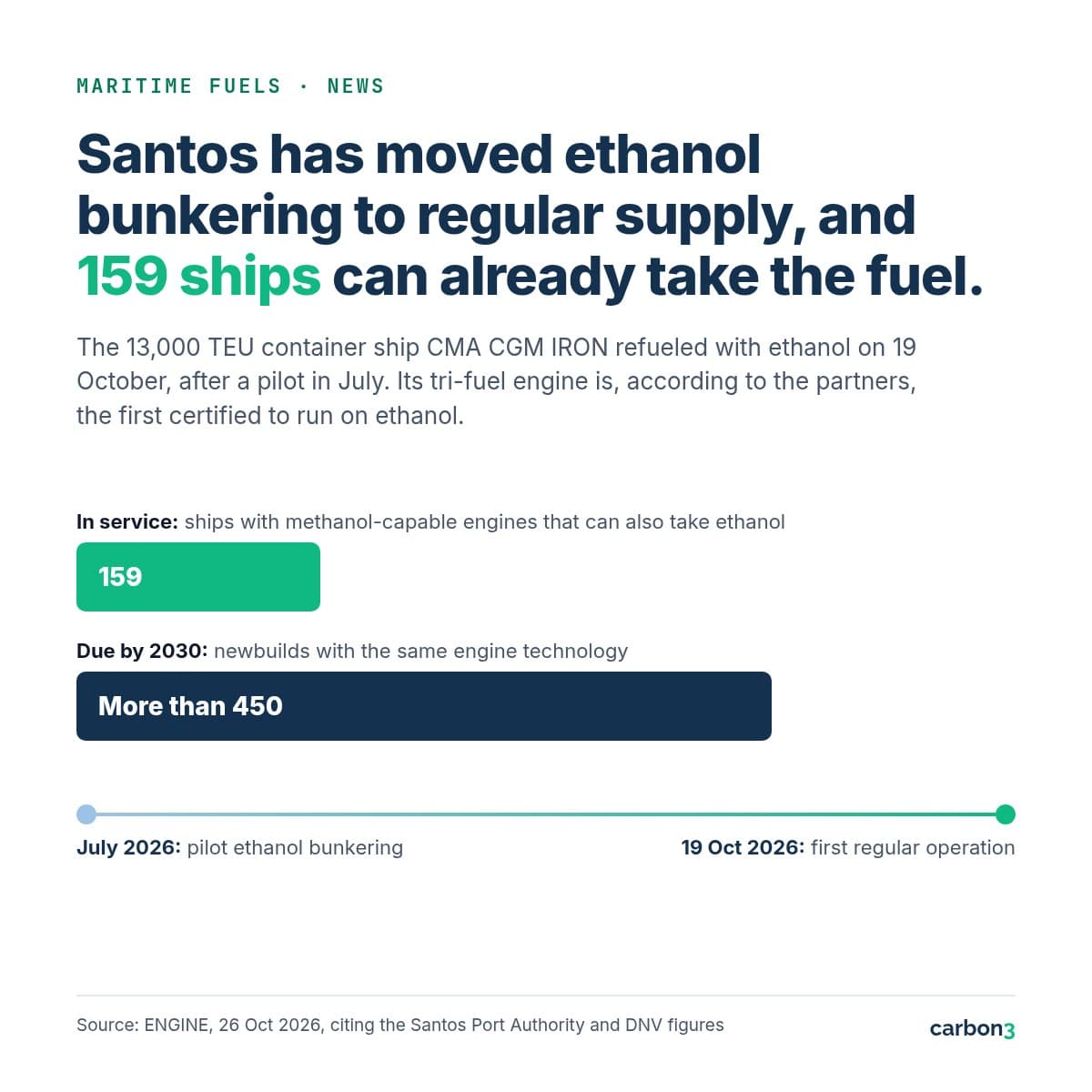
Brazil's Port of Santos now offers ethanol as a regular marine fuel, and the port authority, citing DNV, says 159 ships already have engines that can take it.
Read the articleSector: Maritime
Maritime book and claim has earned trust. It has not yet earned fit.
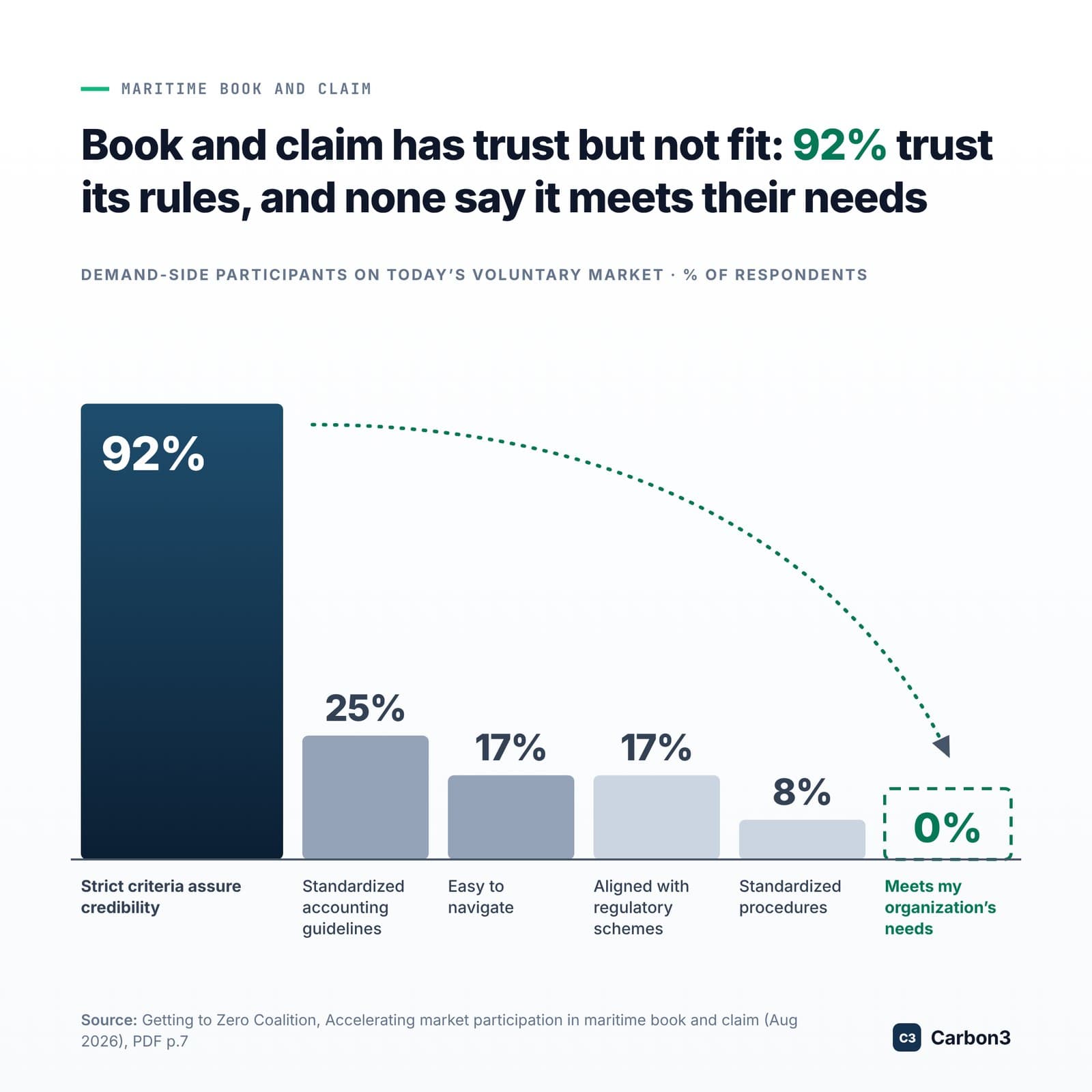
In a Getting to Zero Coalition survey, 92% of buyers trusted book-and-claim criteria, yet not one said the market meets their organization's needs.
Read the articleSector: Maritime
The cost of delayed action in maritime shipping
Green fuel supply through 2030 is effectively spoken for by early movers.
Read the article
See the companies behind these figures in the Data Hub.
Look up your suppliers’ emissions and targets, free.