Port of Santos moves ethanol bunkering from trial to regular supply
Brazil's Port of Santos now offers ethanol as a regular marine fuel, and the port authority, citing DNV, says 159 ships already have engines that can take it.
By Carbon3 team2 min read
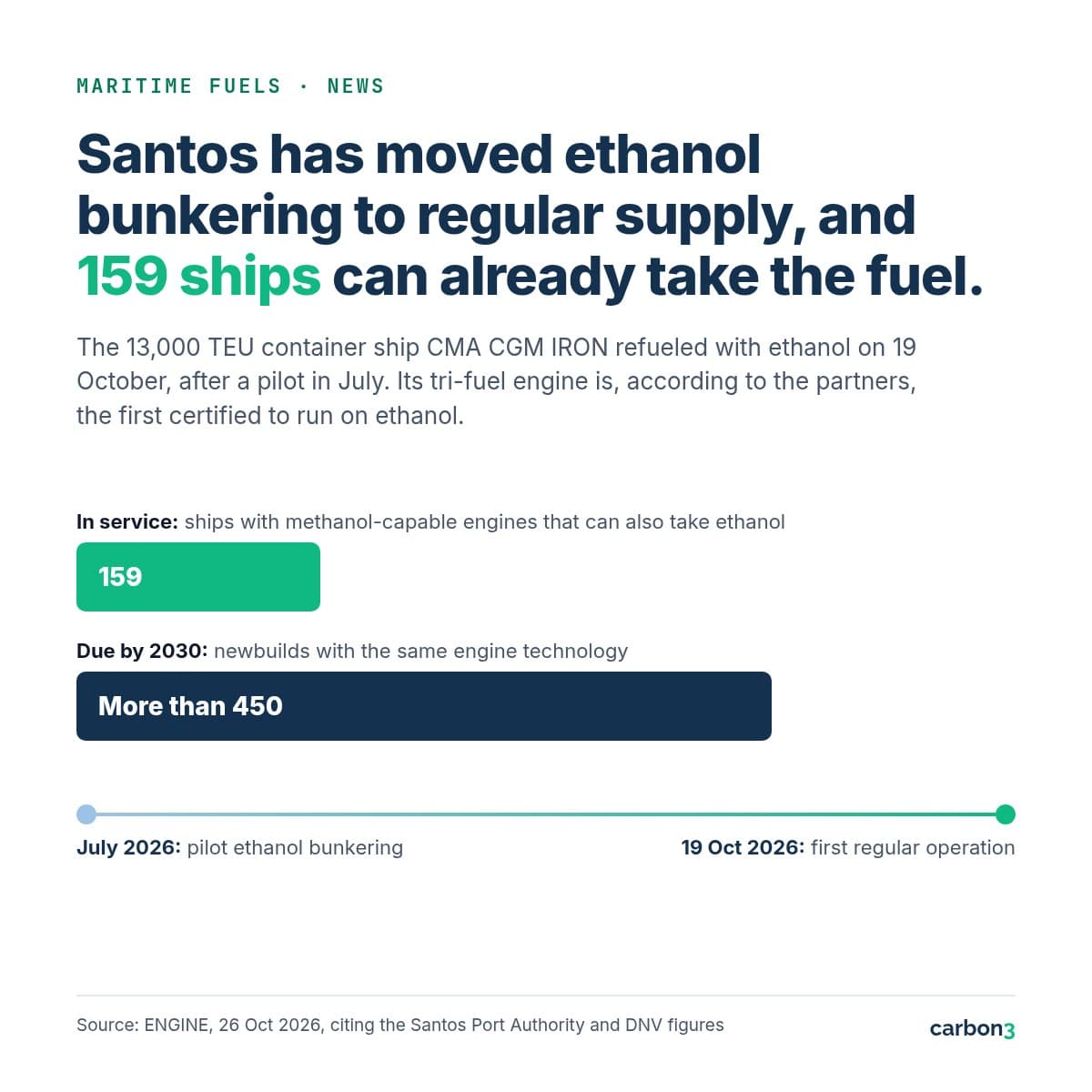
Brazil's Port of Santos has moved ethanol bunkering from a trial to a regular supply model, according to the port authority. A 13,000 TEU container ship was the first vessel to refuel under the new arrangement.
From pilot to regular operation
The CMA CGM IRON took on ethanol at Santos on 19 October, following a pilot bunkering in July. The partners behind the operation say the ship's Everllence tri-fuel engine is the world's first certified to run on ethanol.
Handling a new fuel at a busy cargo port takes more than an engine that can burn it. Ethanol has a low flash point, which means it can ignite at lower temperatures than conventional marine fuel. Bunker One, the fuel supplier, wrote a handling protocol for the operation to address that.
A fleet that is already able to switch
Citing DNV, the port authority said 159 ships already run methanol-capable engines that can also take ethanol. More than 450 newbuilds with the same engine technology are due by 2030.
That matters because a fuel only scales when ships, ports and suppliers move together. Ships that can switch fuels need a reliable place to buy them, and suppliers need regular customers before they invest. A regular supply model at a major cargo port in Brazil is a step toward closing that loop.
Why regular supply matters to cargo owners
In Carbon3's view, regular supply at a major cargo port turns a fuel switch into something cargo owners can fund. A one-off trial is hard to build a program around. A fuel that is available on a regular basis, on a route a company already ships on, is something a buyer can plan for and budget against.
Insetting finances emissions reductions inside a company's own value chain. On a shipping route, that means the shippers whose cargo moves on that route can co-finance the switch to a cleaner fuel, and each claims only its share of the verified reductions.
Recording each share once, as inset credits, keeps those claims clear. Credits are issued to the project developer after independent verification, and Carbon3 records them in its registry, so carriers, cargo owners and auditors can see who holds each claim and that no reduction is counted twice.
Insetting is not offsetting. The action sits inside the freight that companies already pay for.
Claim treatment depends on the applicable reporting framework.
Source: ENGINE, 26 October 2026, citing the Santos Port Authority and DNV.
Originally published on LinkedIn, 27 October 2026.
The Carbon3 Newsletter
Weekly analysis of industrial decarbonization and insetting across Scope 1 to 3, from the Carbon3 team.
Read more from the research team.
Sector: Maritime
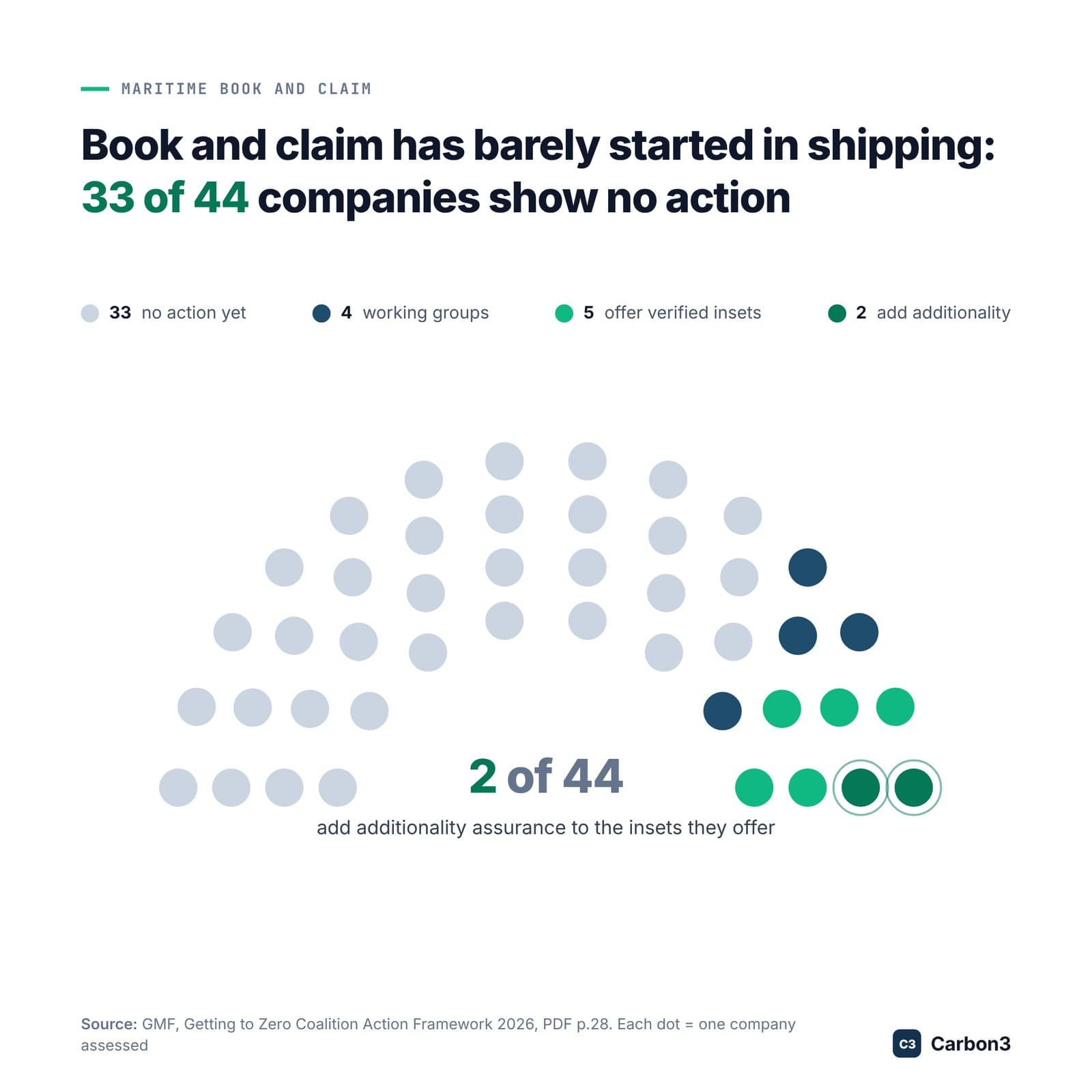
Book and claim has barely started in shipping
The Getting to Zero Coalition assessed 44 shipping companies on book and claim and found 33 showing insufficient action, while five offer verified insets.
Read the articleSector: Maritime
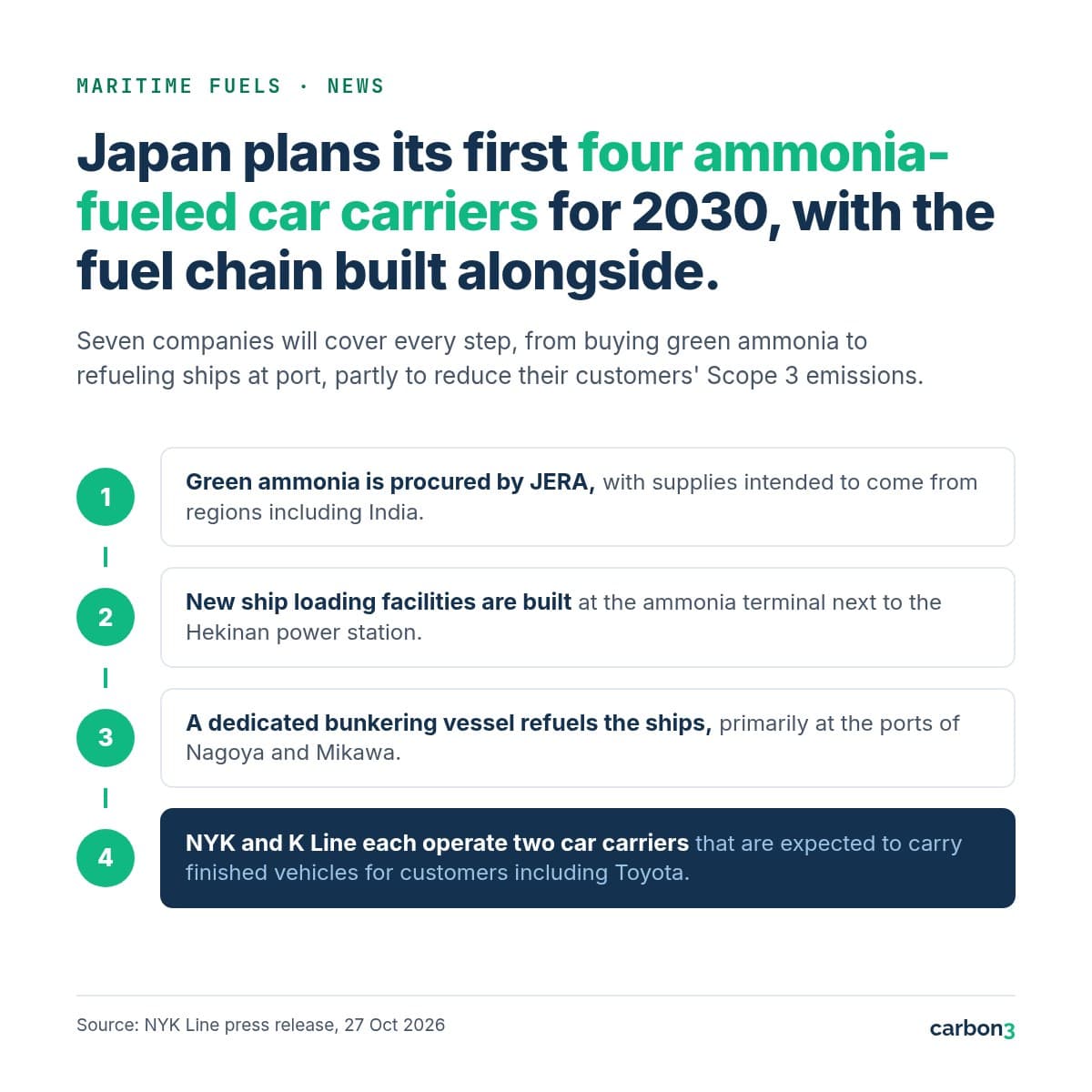
Japan will build its first ammonia-fueled car carriers, with their own fuel supply
Seven Japanese companies, including NYK, K Line and JERA, plan four ammonia-fueled car carriers for 2030, built together with the green ammonia supply and bunkering needed to run them.
Read the articleSector: Maritime
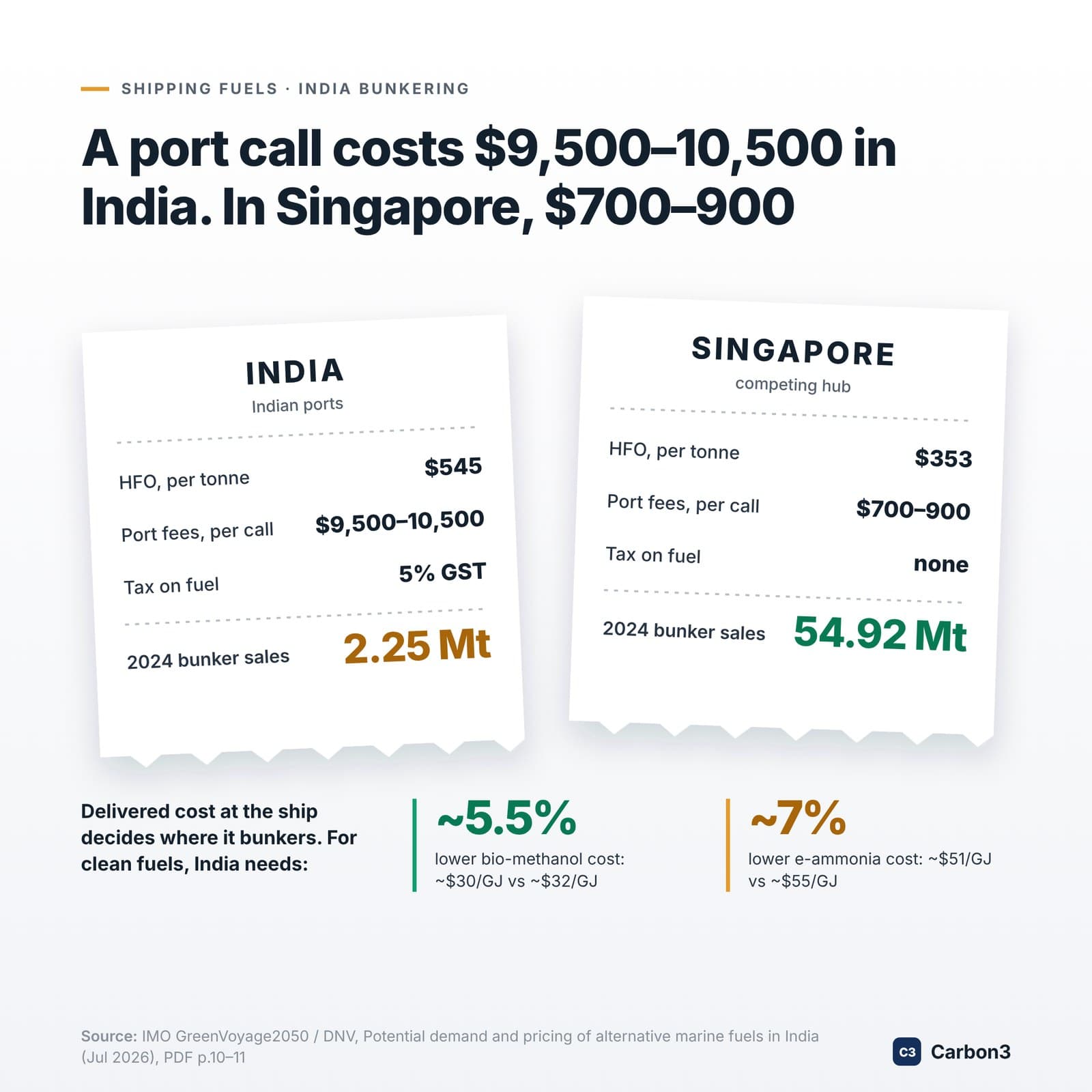
Bunkering in India costs far more than in Singapore, and not only for the fuel
A DNV study for IMO GreenVoyage2050 finds higher fuel prices and port fees in India, and says clean fuels there would need to be 5.5% to 7% cheaper than at the competing hub.
Read the article
See the companies behind these figures in the Data Hub.
Look up your suppliers’ emissions and targets, free.