Sector: Maritime
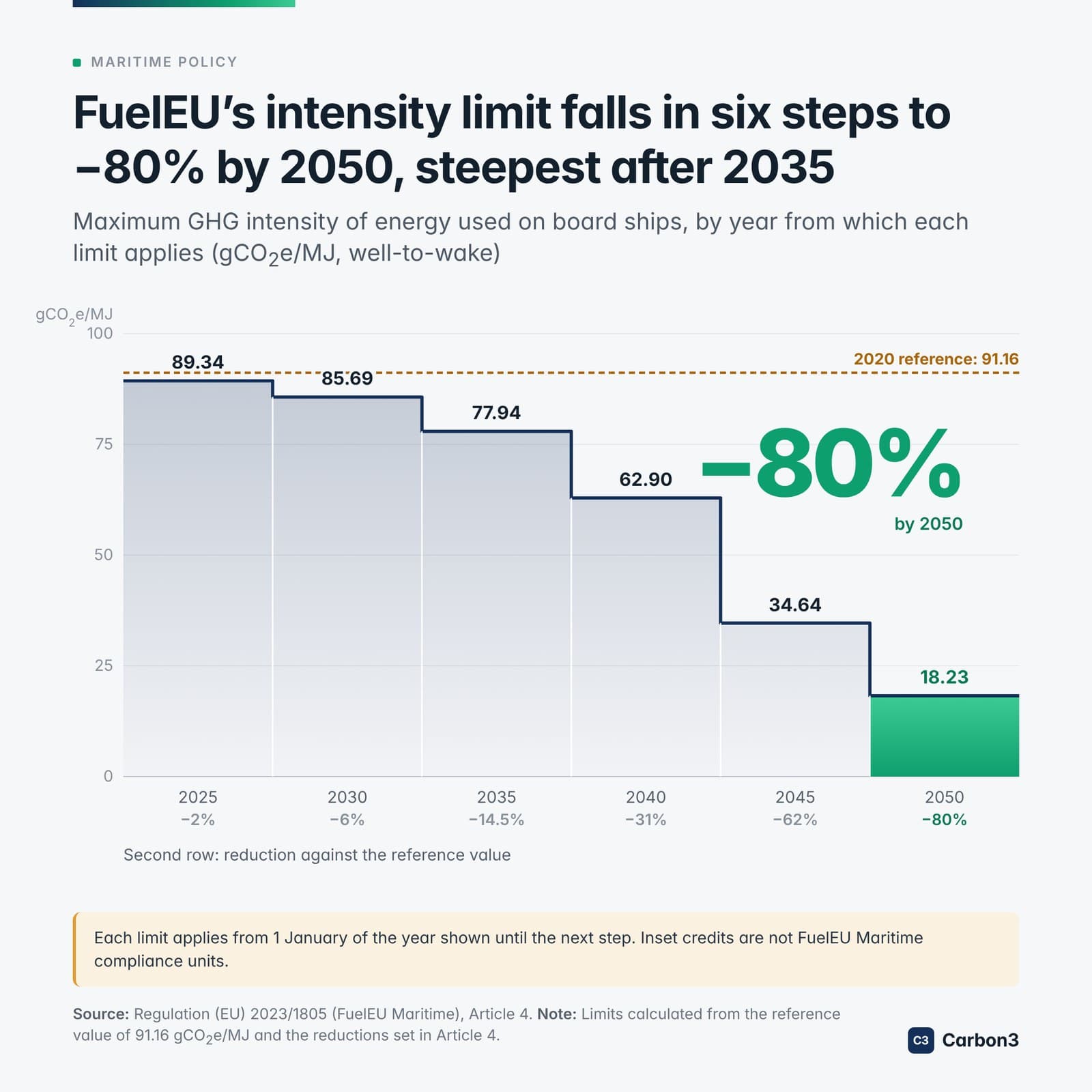
FuelEU Maritime lowers allowed GHG intensity by 80% by 2050, with the steepest steps after 2035
Article 4 of Regulation (EU) 2023/1805 lowers the limit in six steps, from 89.34 gCO₂e/MJ in 2025 to 18.23 in 2050.
Read the article39 articles in this category, newest first.
Newest first
Sector: Maritime
Article 4 of Regulation (EU) 2023/1805 lowers the limit in six steps, from 89.34 gCO₂e/MJ in 2025 to 18.23 in 2050.
Read the articleSector: Maritime
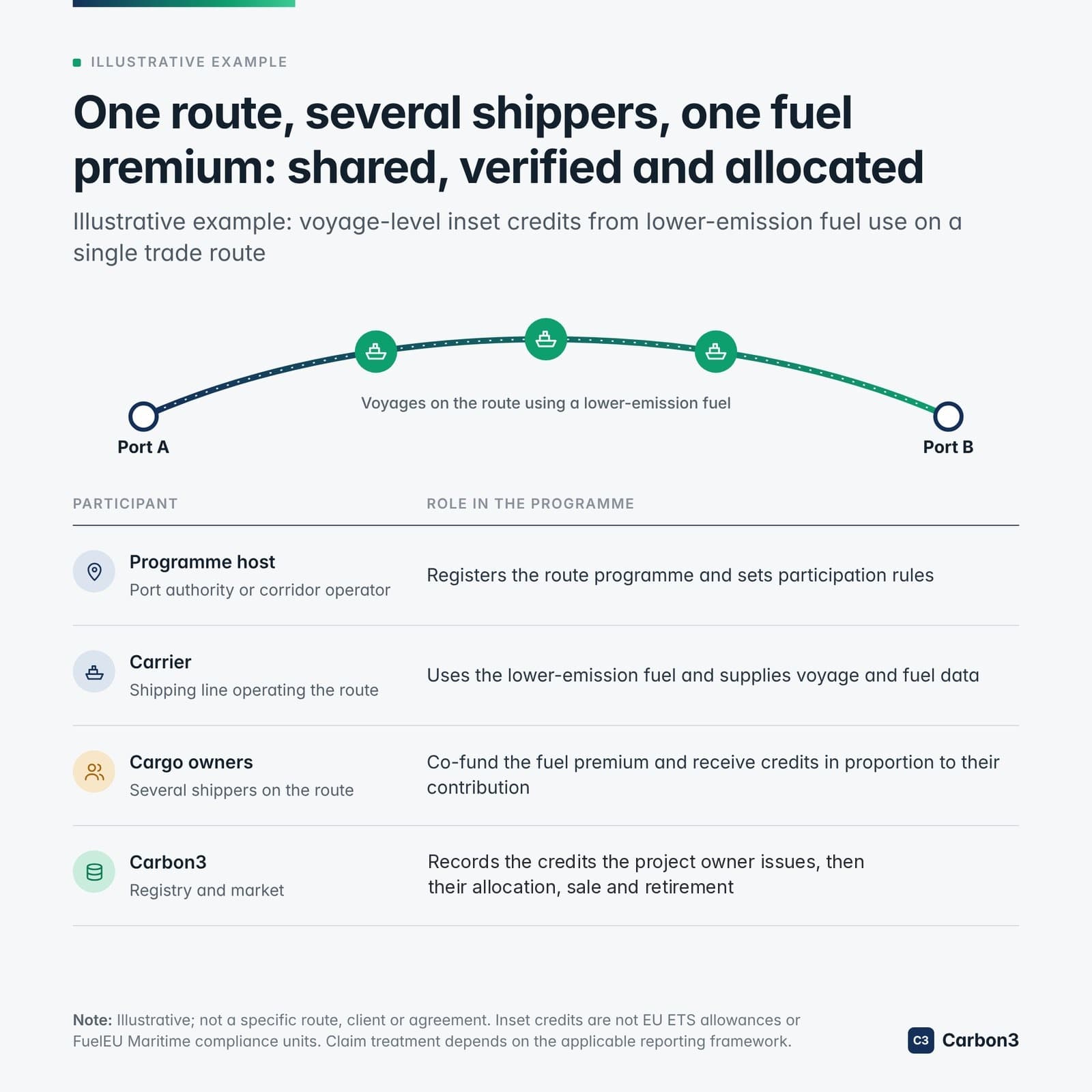
An illustrative route program: cargo owners co-fund a carrier's lower-emission fuel, voyage-level inset credits are issued after verification, and each shipper receives its share.
Read the articleSector: Maritime
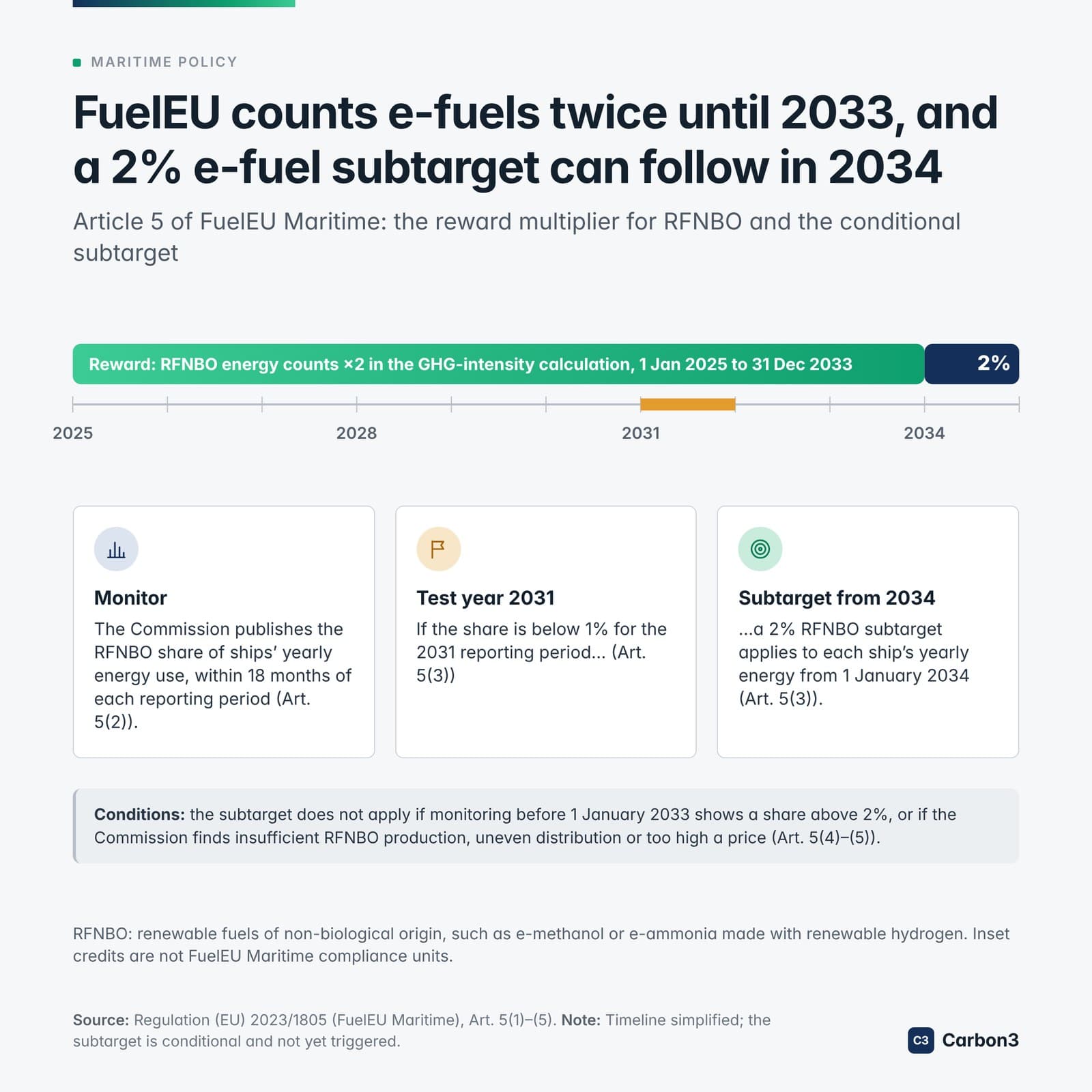
Article 5 of FuelEU Maritime doubles the weight of RFNBO energy from 2025 to 2033.
Read the articleSector: Maritime
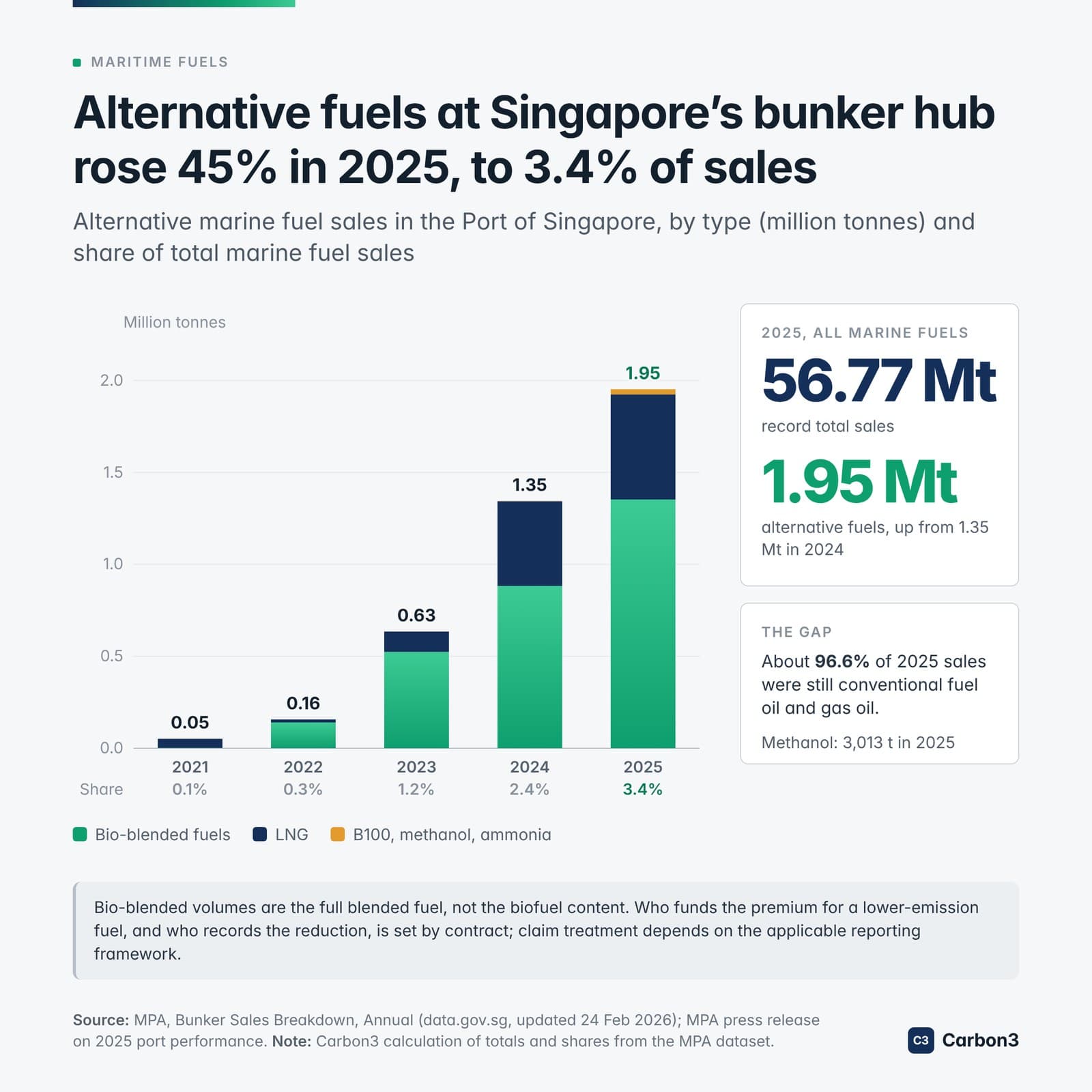
MPA data show a 45% rise on 2024, led by bio-blended fuels and LNG.
Read the articleSector: Maritime
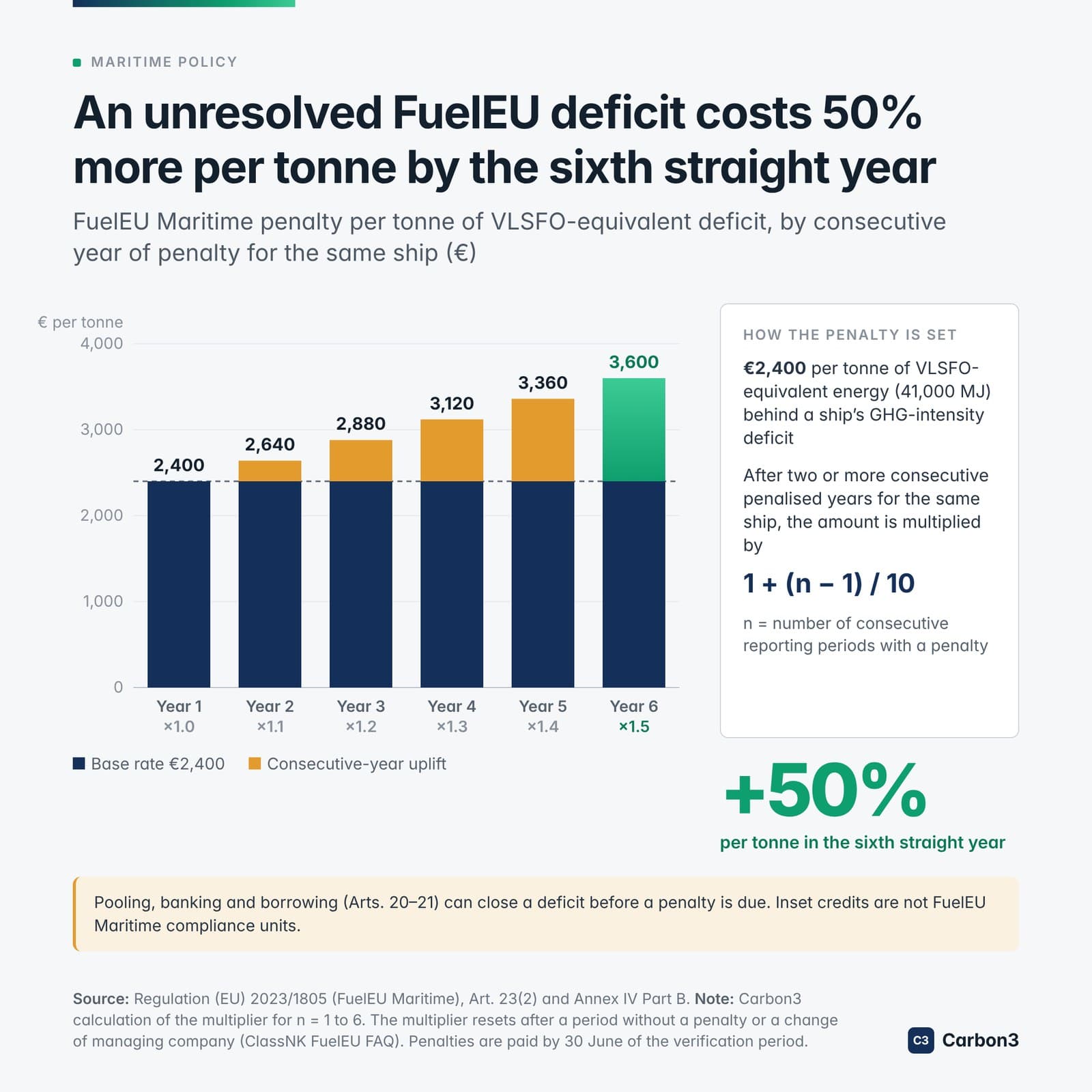
FuelEU Maritime's €2,400 per tonne penalty rises by a tenth for each consecutive year in deficit, reaching €3,600 by the sixth.
Read the articleSector: Maritime
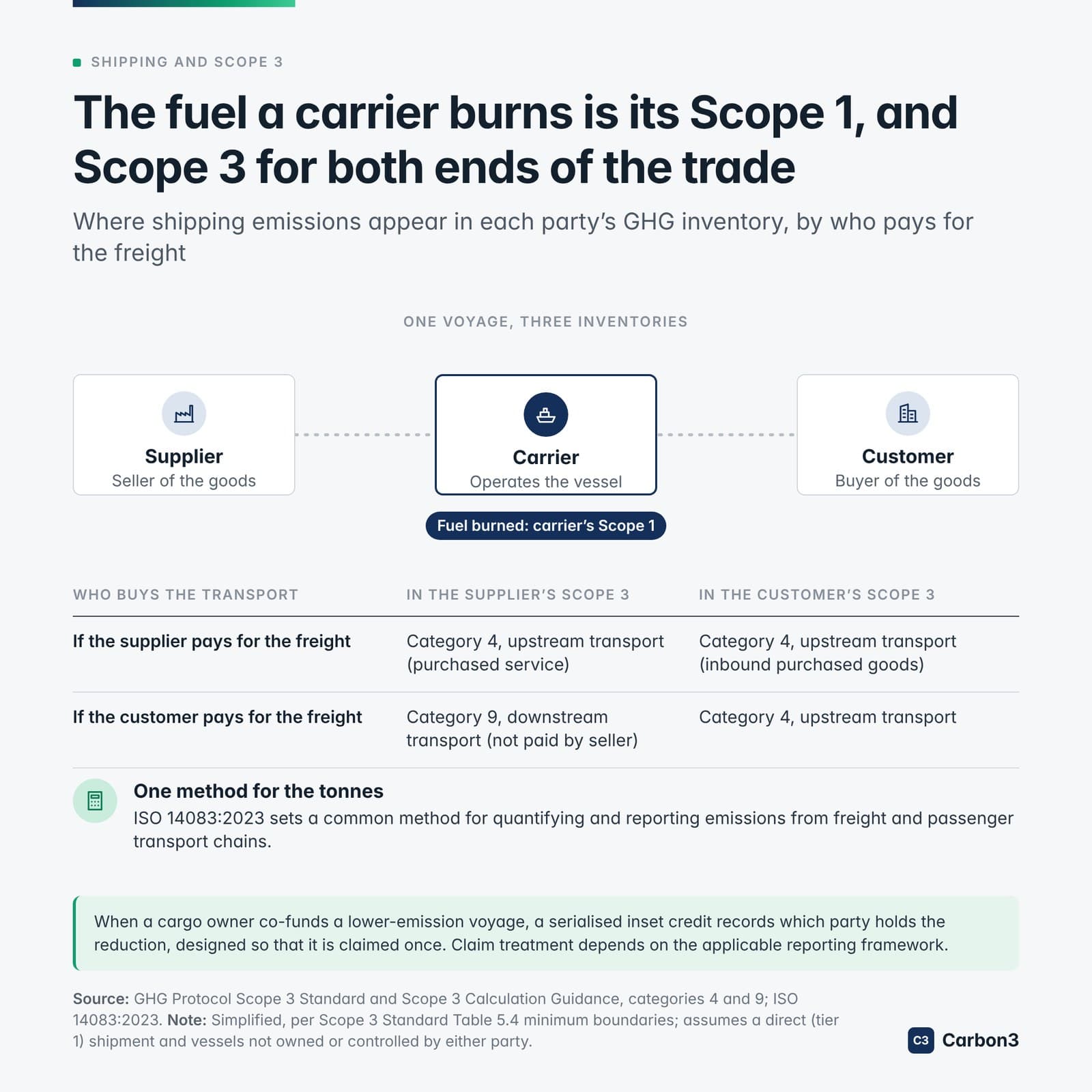
Carrier Scope 1, buyer category 4, seller category 4 or 9.
Read the articleSector: Maritime
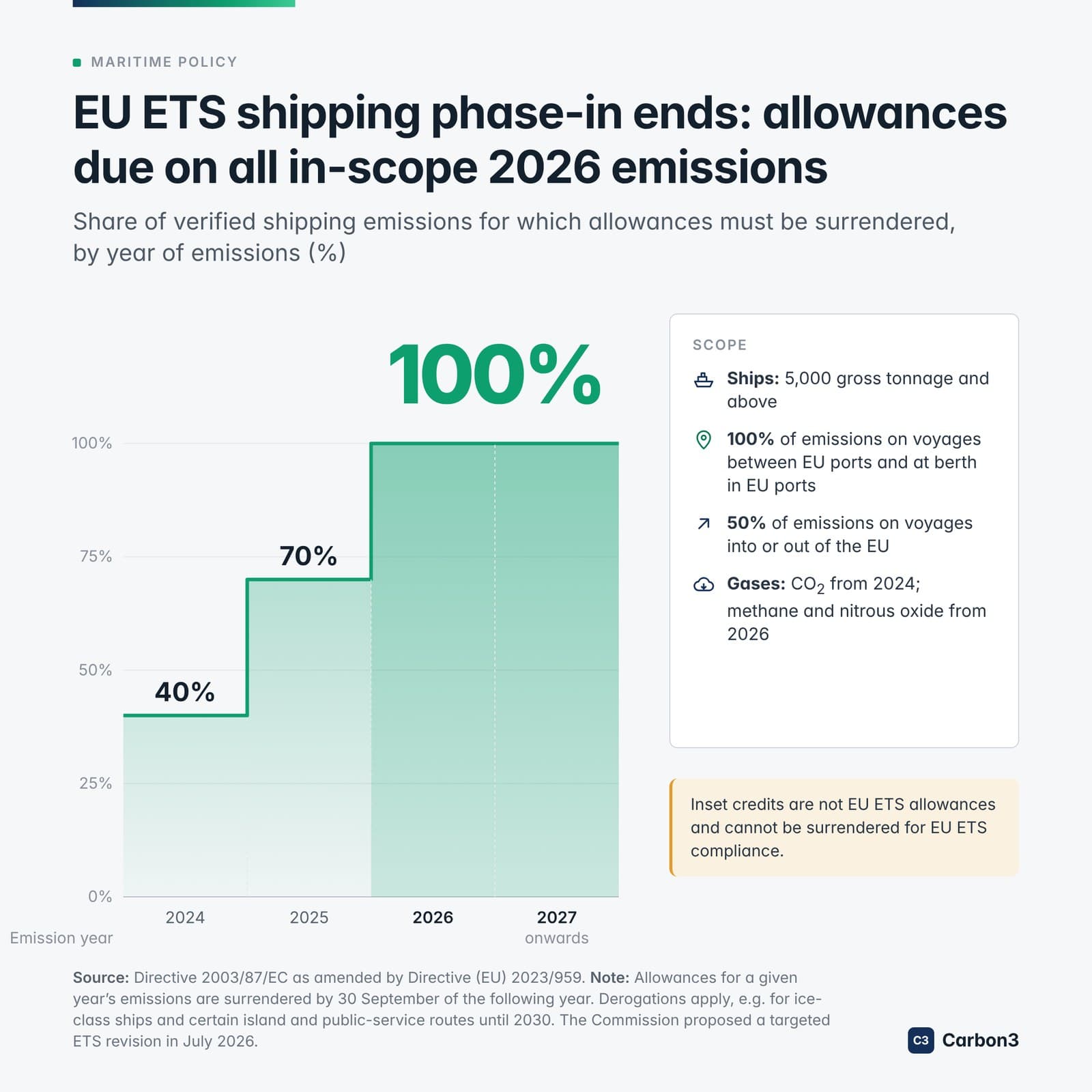
Allowances are now due on 100% of in-scope 2026 shipping emissions.
Read the articleSector: Maritime
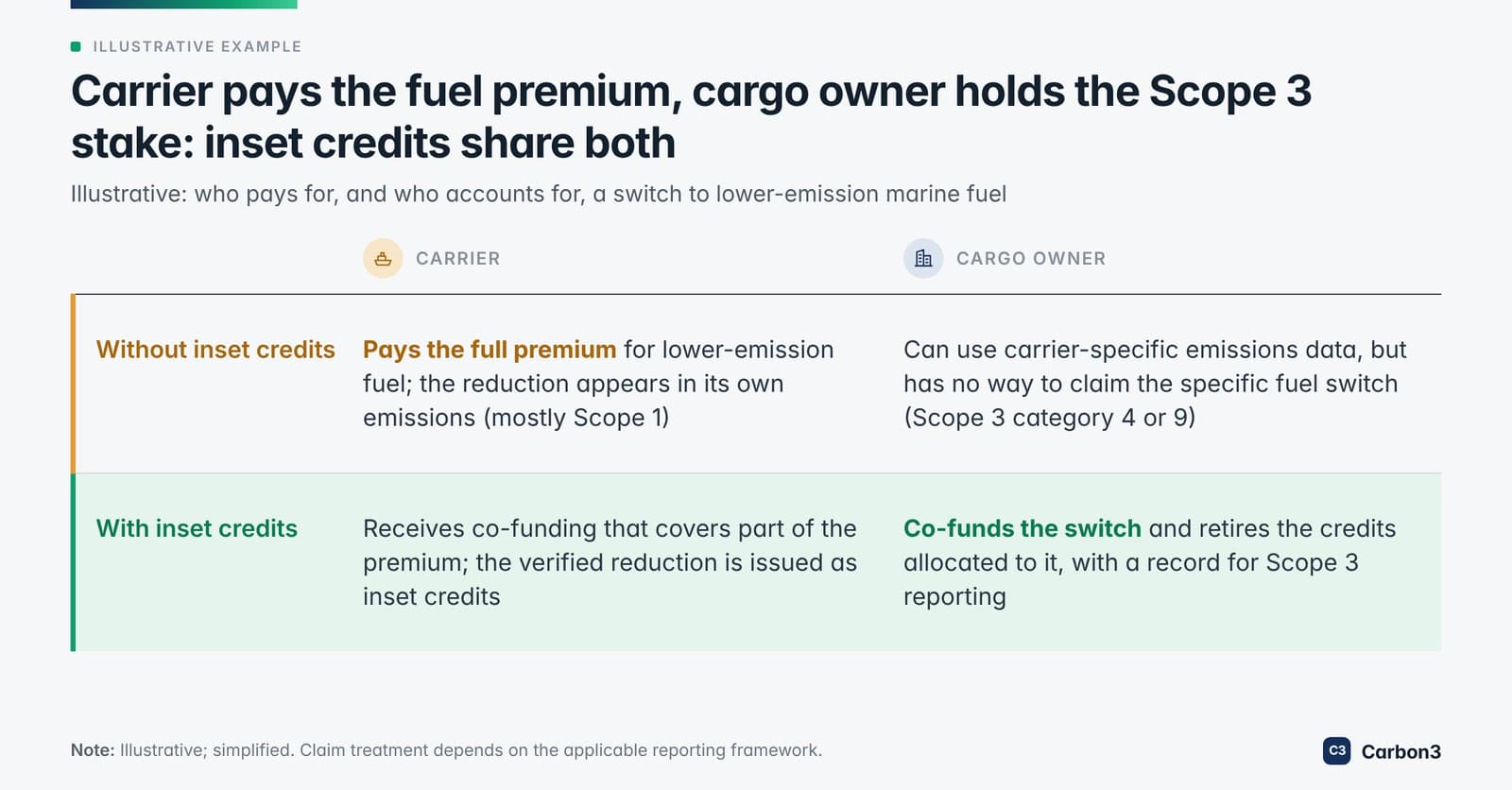
The carrier pays the fuel premium; the cargo owner reports the emissions in Scope 3.
Read the articleSector: Maritime
At the Clean Marine Fuel Forum in Singapore, the case for ethanol rests on three tests: the molecules exist, the assets already work, and the economics clear today.
Read the articleSector: Maritime
No single fuel or pathway to net zero, but progress cannot wait for perfect certainty.
Read the articleSector: Maritime
Green fuel supply through 2030 is effectively spoken for by early movers.
Read the articleSector: Maritime
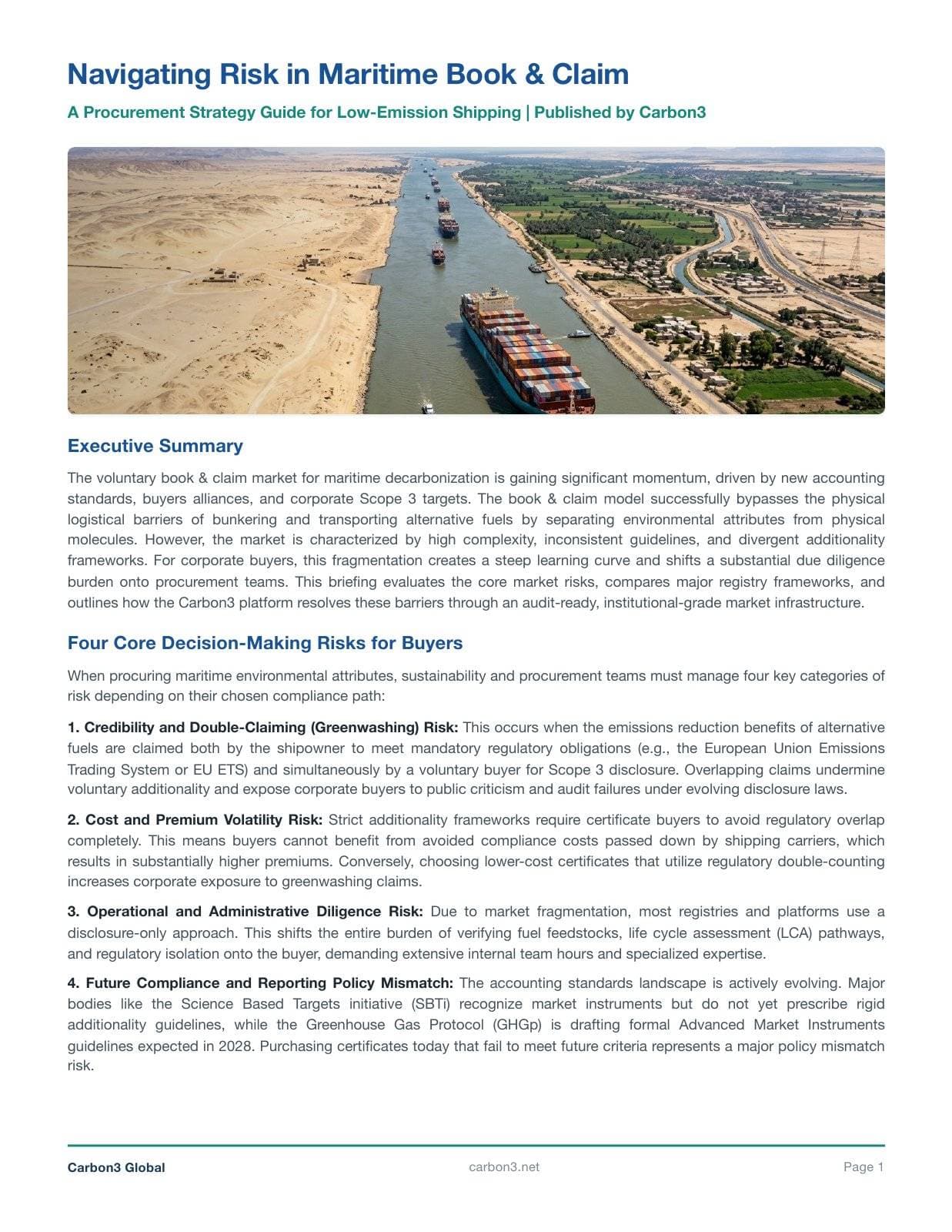
The model is gaining traction with buyers and standards bodies, but inconsistent frameworks push a heavy due-diligence burden onto procurement teams.
Read the article